
Holiday stress can show up in your sleep, hormones, blood sugar, and skin. See what’s happening and what to check before January.
You already know the holidays are demanding. The packed schedules, the late nights, the shift in routine. By January, most people feel like they need a reset.
But this season is different from a busy week at work. It stacks weeks of disrupted sleep, richer food, more alcohol, travel, and emotional load on top of each other. Your body treats all of that as stress, and your hormones, blood sugar, and skin tend to show it.
The good news is that once you understand what is happening, you can do something about it. This post covers what I look at from a functional medicine perspective, what to support, and where to start.

| System | What It Can Look Like |
|---|---|
| Hormones | Changes in cycles, lower libido, more anxiety, or sleep that falls apart |
| Thyroid | Fatigue, feeling cold, and heaviness that goes beyond being tired |
| Blood Sugar | Cravings, afternoon crashes, and waking at 3 a.m. |
| Skin | Dryness, sensitivity, breakouts, puffiness, redness, and dull skin |
Cortisol gets called “the stress hormone,” which makes it easy to write off as just a feeling. It is a steroid hormone, and it is in constant conversation with the systems that regulate your mood, energy, sleep, libido, and cycle.
When stress stays high, the brain signals that run your stress response can crowd out the signals that run your reproductive hormones. In practice, this can look like changes in cycles, lower libido, more anxiety, or sleep that falls apart.[1] The body is prioritizing the stress response over reproduction, which is a sensible short-term trade and an unhelpful long-term one.
Thyroid is worth watching too. Fatigue, feeling cold, and heaviness that goes beyond being tired overlap with thyroid changes, and stress and poor sleep can influence how thyroid hormone is used in the body. If you feel that way for weeks, it is worth asking about testing instead of assuming it is just the season.
None of this means every holiday symptom is hormonal. But if your symptoms started or got worse when your routine changed, that timing is a clue.
Cortisol helps your body release stored glucose so you have fuel to handle a threat. That is useful in the moment. When it keeps happening, and when sleep is short, your body can handle sugar less well.
Nights of limited sleep in healthy young men led to impaired glucose tolerance and higher evening cortisol[2]
Average gain over the holiday season, and it tended to stay on[3]
In a classic study, healthy young men who were limited to four hours of sleep for six nights had impaired glucose tolerance and higher evening cortisol compared with when they were well rested. That is a small, short study, but it shows how quickly poor sleep can change your metabolic picture.
Holiday weight gain is real but smaller than the myth. In a well-known study, adults gained about a pound on average over the holiday season, and it tended to stay on. So this is less about one big week and more about small shifts that add up, which is also why small habits work.
When I look at blood sugar, I look beyond glucose. Fasting insulin can be elevated even when glucose looks normal, and cravings, afternoon crashes, and waking at 3 a.m. can all be clues.
Skin is one of the first places stress becomes visible. Psychological stress has been shown to slow how quickly the skin barrier recovers, and a weaker barrier means more dryness, more sensitivity, and products that suddenly sting.[4] In a study of 60 women, poor sleepers had weaker skin barrier function and more signs of skin aging than good sleepers, although that shows an association, not proof of cause.[5]
Inflammation plays a part too. Breakouts, puffiness, redness, and dull skin often show up during and after the holidays, even in people who rarely have them.
In my practice I do not start with a product or a single lab. I start with the pattern. Here is what I consider when someone says the holidays wrecked them:
When do you wake up, when do you go to sleep, and how much light do you get in the morning? Your body clock runs your cortisol rhythm, so this comes first.
Are you wired at night and dragging by day? Waking at the same time every night? Crashing after meals? The pattern matters more than any one symptom.
Depending on your history, these can include thyroid, fasting glucose and insulin, ferritin, and vitamin D. Cortisol testing can show your daily rhythm, but it is not a diagnosis on its own, and it is one piece of a bigger picture.
I group hormone symptoms into four working patterns, and most people overlap:
Puffiness, constipation, or alcohol hitting harder than it used to
Low energy, dry skin, hair shedding, slow recovery
Cravings, blood sugar swings, and stubborn midsection weight
Wired at night, tired in the morning, and sleep that stopped being restful
These are clues that organize questions. They do not diagnose a cause.
You do not need a long list or a perfect month. These are the basics I come back to:
Consistency over intensity. One habit you keep going is worth more than five you drop by December 10.
Occasional rough nights are normal. But if poor sleep, anxiety, low mood, or fatigue go on for weeks, or they are interfering with your daily life, please talk with your healthcare provider. Do not wait for January.
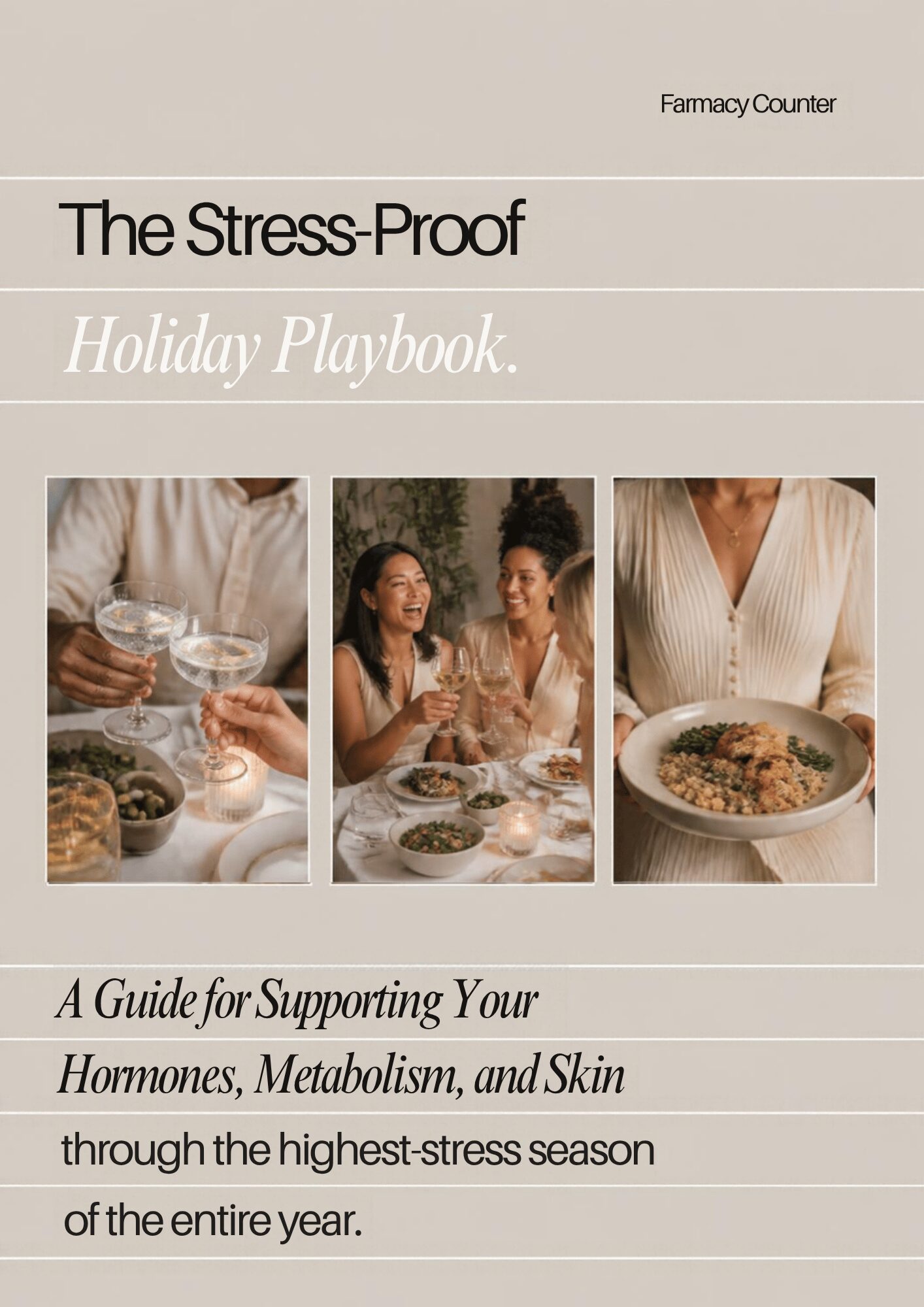
I put together a free guide for this exact season. The Stress-Proof Holiday Playbook explains how stress shows up in your sleep, cravings, mood, and skin, with four simple protocols, a blood sugar decision tree for parties, and a weekly check-in to see what is working.
Free instant download. No spam, unsubscribe anytime.
If you would rather talk through what is going on with your own hormones, blood sugar, and skin, I also offer a free discovery call. No pressure, just a conversation about whether functional medicine is the right next step for you.
Book Your Free Discovery Call →To your health and vitality,Dr. Ryan
When stress stays high, the brain signals that run your stress response can crowd out the signals that run your reproductive hormones. In practice, this can look like changes in cycles, lower libido, more anxiety, or sleep that falls apart. Stress and poor sleep can also influence how thyroid hormone is used in the body.
Yes. In a classic study, healthy young men who were limited to four hours of sleep for six nights had impaired glucose tolerance and higher evening cortisol compared with when they were well rested. It was a small, short study, but it shows how quickly poor sleep can change your metabolic picture.
Less than the myth. In a well-known study, adults gained about a pound on average over the holiday season, and it tended to stay on. That is why small, consistent habits matter more than one big week.
Psychological stress has been shown to slow how quickly the skin barrier recovers, and a weaker barrier means more dryness, more sensitivity, and products that suddenly sting. Inflammation plays a part too, and breakouts, puffiness, redness, and dull skin often show up during and after the holidays.
Depending on your history, these can include thyroid, fasting glucose and insulin, ferritin, and vitamin D. Cortisol testing can show your daily rhythm, but it is not a diagnosis on its own, and it is one piece of a bigger picture.
For educational purposes only. Not a diagnosis, and not a substitute for care from your healthcare provider. Talk with your provider before starting or stopping any medication or supplement.