
Why Every Woman Over 35 Should Know About Creatine
Creatine has been studied for decades, mostly in men. New research in menopausal women is changing the conversation, and what it found goes well beyond the gym.
- By Dr. Ryan Wagner, Pharm.D
- 9 Min Read
- Evidence-Based
If you’ve ever considered creatine and immediately pictured a 22-year-old loading up before a workout, you’re not alone. That’s the context it’s been sold in for decades, and it’s why most women dismiss it without a second thought.
But creatine isn’t primarily a performance drug. It’s an energy substrate: a compound your body makes naturally and stores in muscle and brain tissue to fuel high-demand cellular work. And as women move through their mid-30s and beyond, natural creatine production starts to decline at exactly the same time that energy, cognition, muscle, bone, and mood all start to shift.[1]
That’s not a coincidence. And it’s why the research conversation around creatine and women is finally starting to catch up.
But creatine is just one piece. The real question is whether your metabolism has the right foundation to put it to work.
Creatine Quick Facts
| Topic | The Short Answer |
|---|---|
| What it is | A natural compound made from arginine, glycine, and methionine |
| Where it’s stored | About 95% in skeletal muscle; the rest in the brain, heart, and other tissues |
| Food sources | Mostly red meat and fish, roughly 1–2 grams per pound raw |
| Best-studied form | Creatine monohydrate |
| Typical dose | 3–5 grams daily, no loading phase or special timing |
| Check with your provider first | Kidney disease, pregnancy, or breastfeeding |
What Is Creatine, and Where Does It Come From?
Creatine is a naturally occurring compound made from three amino acids: arginine, glycine, and methionine. Your body synthesizes it primarily in the liver and kidneys, and about 95% of it is stored in skeletal muscle, with the remaining 5% distributed in the brain, heart, and other tissues.
You also get creatine from food. It’s found almost exclusively in animal products, and red meat and fish are the richest sources. A pound of raw beef or salmon contains roughly 1–2 grams of creatine. Cooking degrades some of it, which is part of why dietary intake alone rarely saturates muscle stores fully, even in people who eat meat regularly.[3]
Vegetarians and vegans have measurably lower baseline creatine levels, which means they tend to respond more dramatically to supplementation. But even omnivores typically fall short of the amounts that research associates with optimal tissue saturation, which is why supplementation is relevant regardless of diet.
Creatine Monohydrate Options Worth Considering
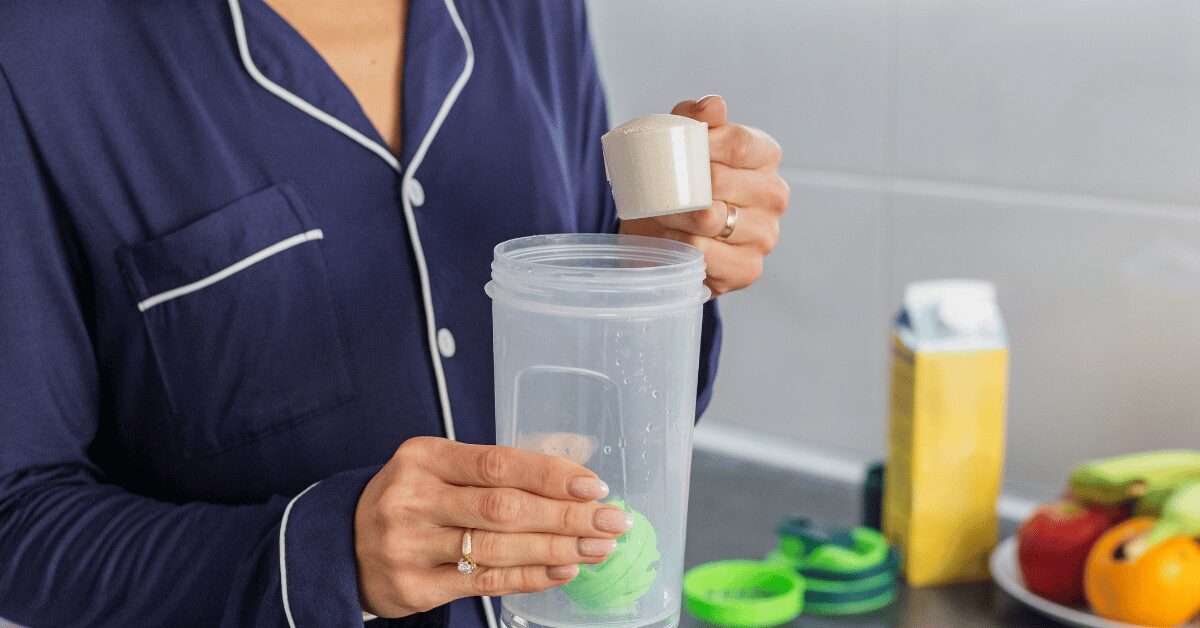
If you’re adding creatine to your routine, creatine monohydrate is the form with the deepest research behind it and the most straightforward dosing.
- 3–5 g daily
- Water or a smoothie
- No loading phase
- No special timing
Products shown are available through my Fullscript dispensary. Farmacy Counter may earn a commission on purchases.
What Creatine Actually Does in the Body
Creatine’s primary job is to regenerate ATP (adenosine triphosphate), the molecule your cells use for energy. When demand is high, whether that’s lifting something heavy, sustaining focus through a long afternoon, or running a metabolic process that requires a burst of cellular energy, creatine phosphate donates a phosphate group to replenish ATP rapidly.
This matters in muscle. It matters in the brain. It matters in bone. Anywhere your cells are doing high-intensity or sustained work, creatine is part of the support system that keeps that work going.
The reason most of the research was done in men isn’t that creatine doesn’t apply to women. It’s that women were chronically underrepresented in sports science research until recently. What we’re learning now is that women may actually have more to gain from supplementation, because baseline creatine stores in women tend to run lower, and the hormonal shifts of perimenopause and menopause accelerate the very deficits creatine can help address.
What the New Research Actually Found
A recent randomized controlled trial in perimenopausal and menopausal women is one of the most compelling data points we have so far. Over 8 weeks, creatine supplementation improved reaction time and increased brain creatine levels, meaning more fuel available for neurological function. One group also saw improved lipid profiles, a finding that matters for cardiovascular health in the postmenopausal years when estrogen’s protective effect on the heart begins to wane.[2]
Worth knowing: this small trial (36 women) used creatine hydrochloride at lower doses than the 3–5 grams of monohydrate used in most research.
This wasn’t a fringe finding. It builds on a growing body of research showing that creatine supports several systems that women over 35 are trying to actively protect:
Cognitive Function and Brain Health
Creatine supports the brain’s energy demands the same way it supports muscle. Research has shown improvements in memory, processing speed, and reaction time, effects that appear more pronounced in women, possibly because female brains have lower baseline creatine levels than male brains. During perimenopause and menopause, when brain fog and cognitive sluggishness are among the most commonly reported symptoms, this is not a small thing.[1]
Muscle Mass and Body Composition
Estrogen plays a direct role in muscle protein synthesis. As it declines, preserving lean mass becomes harder and more important, both for metabolic rate and for long-term function and independence. Creatine supports the cellular energy machinery that makes strength training more effective and muscle retention more achievable, even without high training volumes. This is exactly why muscle preservation is a cornerstone of the Metabolic Makeover approach, because your metabolic rate lives and dies by how much lean mass you’re carrying.
Bone Health
The connection between creatine and bone is less widely known. Creatine appears to stimulate bone-forming cells (osteoblasts). In a 2-year trial in postmenopausal women doing resistance training, creatine didn’t change bone mineral density, but it did help maintain the shape and bending strength of the femoral neck, the part of the hip most prone to fracture.[4] The bone story is promising, but still developing.
Mood Stability and Neurological Resilience
This is an emerging area, but the data is interesting. Creatine plays a role in neurotransmitter regulation, and some research suggests it may support mood and reduce depressive symptoms, particularly in women.[5] The mechanism likely relates to brain energy availability. Low creatine availability may contribute to the mood variability many women experience during hormonal transitions.
Cardiovascular and Metabolic Markers
The lipid improvements seen in the menopausal trial aren’t isolated. Other research has suggested creatine may support healthy blood sugar regulation and reduce markers of oxidative stress. These are areas of active investigation, but the signals are consistent with what we’d expect from a compound that improves cellular energy efficiency.
Addressing the Concerns Most Women Have
“Won’t creatine make me look bulky?”
No. The bloating and rapid weight gain associated with creatine come from loading protocols, doses of 20+ grams per day used to saturate muscle stores quickly. At a maintenance dose of 3–5 grams daily, water retention is minimal and muscle changes occur gradually, proportional to training. For women who aren’t doing high-volume resistance training, the visible effect on body composition is essentially nil.
“I’m not an athlete. Is creatine relevant to me?”
Yes. Creatine’s benefits for brain health, bone, and mood don’t require athletic training to materialize. These are systemic effects driven by cellular energy availability. You don’t have to be lifting heavy to benefit from having better-fueled neurons and more resilient bone tissue.
“Is creatine safe long-term?”
Creatine is one of the most extensively studied supplements in existence, with a safety profile that holds up across decades of research. It’s not a stimulant, not a hormone, and not a compound that requires cycling. The concerns that do exist, primarily around kidney stress, apply to people with pre-existing kidney disease taking very high doses, not to healthy adults taking 3–5 grams daily.
“What kind of creatine should I take?”
Creatine monohydrate is the form with the most research behind it and the lowest cost. The fancier branded forms (creatine HCl, buffered creatine, and others) don’t have meaningfully better evidence. Plain creatine monohydrate, 3–5 grams per day, mixed into water or a smoothie. No loading phase needed.
Who Should Think Carefully Before Starting
Creatine is well-tolerated by most people, but a few considerations:
- Kidney disease or significantly impaired kidney function. Discuss creatine with your provider before starting, as creatine metabolism produces creatinine, which can affect kidney function markers on labs.
- If you’re monitoring labs for other reasons, including a functional medicine workup: creatine supplementation can elevate serum creatinine slightly. This is a measurement artifact, not a sign of kidney damage, but it’s worth flagging to whoever is interpreting your results.
- Pregnancy and breastfeeding. There isn’t enough data yet to make a confident recommendation either way. Until there is, it’s reasonable to hold off.
The Bigger Picture for Women 35+
One of the consistent themes in functional medicine is that women spend decades being told their symptoms are normal: fatigue, brain fog, mood changes, body composition shifts, declining strength, without anyone connecting those symptoms to measurable, addressable deficits.
Creatine won’t fix everything. But it addresses something real.
It addresses a decline in cellular energy substrate that affects muscle, brain, bone, and mood simultaneously, at a stage of life when those systems are already under hormonal pressure. It’s inexpensive, well-researched, and requires no prescription.
For women who are already doing the work (optimizing nutrition, building strength, addressing sleep, investigating their labs), creatine is a logical addition to the stack. For women who are earlier in that process and looking for a low-barrier, high-leverage starting point, it’s worth serious consideration.

Ready to Understand the Full Picture?
Creatine is a powerful tool, but it works best when your metabolism is primed to respond. If you’re ready to understand what’s really driving your energy crashes, fat storage, and hormonal shifts, and what to do about it, grab the free Metabolic Makeover guide.
It’s the same root-cause framework I use with my clients, broken down into simple, actionable steps you can start today.
Free instant download. No spam, unsubscribe anytime.
For educational purposes only. Not a diagnosis, and not a substitute for care from your healthcare provider. Talk with your provider before starting or stopping any medication or supplement.
- Smith-Ryan AE, Cabre HE, Eckerson JM, Candow DG. Creatine supplementation in women’s health: a lifespan perspective. Nutrients. 2021;13(3):877. https://pubmed.ncbi.nlm.nih.gov/33800439/
- Korovljev D, Ostojic J, Panic J, et al., Ostojic SM. The effects of 8-week creatine hydrochloride and creatine ethyl ester supplementation on cognition, clinical outcomes, and brain creatine levels in perimenopausal and menopausal women (CONCRET-MENOPA): a randomized controlled trial. J Am Nutr Assoc. 2025.
- Brosnan ME, Brosnan JT. The role of dietary creatine. Amino Acids. 2016;48(8):1785–1791.
- Chilibeck PD, Candow DG, Gordon JJ, et al. A 2-yr randomized controlled trial on creatine supplementation during exercise for postmenopausal bone health. Med Sci Sports Exerc. 2023;55(10):1750–1760. https://pubmed.ncbi.nlm.nih.gov/37144634/
- Roitman S, Green T, Osher Y, Karni N, Levine J. Creatine monohydrate in resistant depression: a preliminary study. Bipolar Disord. 2007;9(7):754–758.