Evening alcohol can sharply suppress growth hormone and disrupt the overnight recovery window your lean mass depends on. Here’s what that means for your results.
You’re training five days a week. You’re hitting your protein targets. You’re taking recovery seriously: sleep, hydration, the whole thing. By most measures, you’re doing everything right.
And two nights a week, you have a few drinks.
It seems reasonable. You’ve earned it. A couple of drinks isn’t going to undo months of consistent work.
Except the research tells a more complicated story, and it plays out in the overnight window your body depends on most.

Muscle is not built in the gym. The training stimulus happens there, but the adaptation (the synthesis of new protein, the repair of damaged tissue, the hormonal signaling that drives body composition change) happens at night.
One of the most important drivers of that process is growth hormone. Growth hormone is released in pulses during deep, slow-wave sleep. It’s a key anabolic signal your body uses to support muscle protein synthesis, mobilize fat for fuel, and repair tissue damaged during training.
In classic sleep-lab research, the size of the drop depended on how much was consumed[1]
Research going back decades has found that evening alcohol can blunt sleep-related growth hormone release substantially. The mechanism involves alcohol’s effect on the hypothalamus and pituitary gland, disrupting the signaling that initiates GH release during deep sleep. The effect is dose-dependent, so two drinks likely blunts it less than a heavy night, but the direction is consistent.
The result is a recovery window that looks full on the clock (you slept eight hours) but delivered less of the hormonal output your body needed.
Beyond growth hormone, alcohol alters sleep architecture in ways that compound the metabolic cost.
This is why it feels like you sleep well after drinking: in some respects you do, initially. From a functional medicine perspective, this matters for several reasons beyond growth hormone:
Alcohol disrupts the natural cortisol rhythm, which should be low overnight and rise gradually toward morning. Alcohol-disrupted sleep can produce abnormal cortisol patterns that persist into the next day, increasing catabolic signaling and opposing the anabolic environment you’re trying to create.[1]
Regular alcohol use over time can suppress testosterone through its effects on the hypothalamic-pituitary-gonadal axis, and heavier drinking can lower it acutely as well.[2] In men already at the lower end of the normal range, this can be clinically meaningful.
Alcohol metabolism produces byproducts, particularly acetaldehyde and acetate, that can impair insulin signaling and glucose metabolism. Combined with the sleep disruption that independently reduces insulin sensitivity,[3] two nights of drinking per week can meaningfully shift the metabolic environment in which your training adaptations are trying to occur.
This is a pattern I see in practice: a man who is training consistently, eating reasonably well, and still not seeing the body composition changes his effort should be producing. Training age is not the issue. Caloric intake is not the issue. There’s a gap between the input and the output.
Alcohol is frequently the variable no one examines, not because it’s taboo, but because two nights a week doesn’t feel like a significant exposure. At an individual level, for a man trying to optimize body composition and preserve lean mass, the overnight hormonal disruption can be the difference between adapting and stagnating.
One disrupted recovery night is manageable
Becomes a pattern your body adapts around
Per year of recovery running at partial capacity
Over time, this looks like: muscle preservation that slows despite adequate training stimulus. Fat loss that plateaus without a clear dietary explanation. Training performance that doesn’t progress the way it should given the volume of work being done.
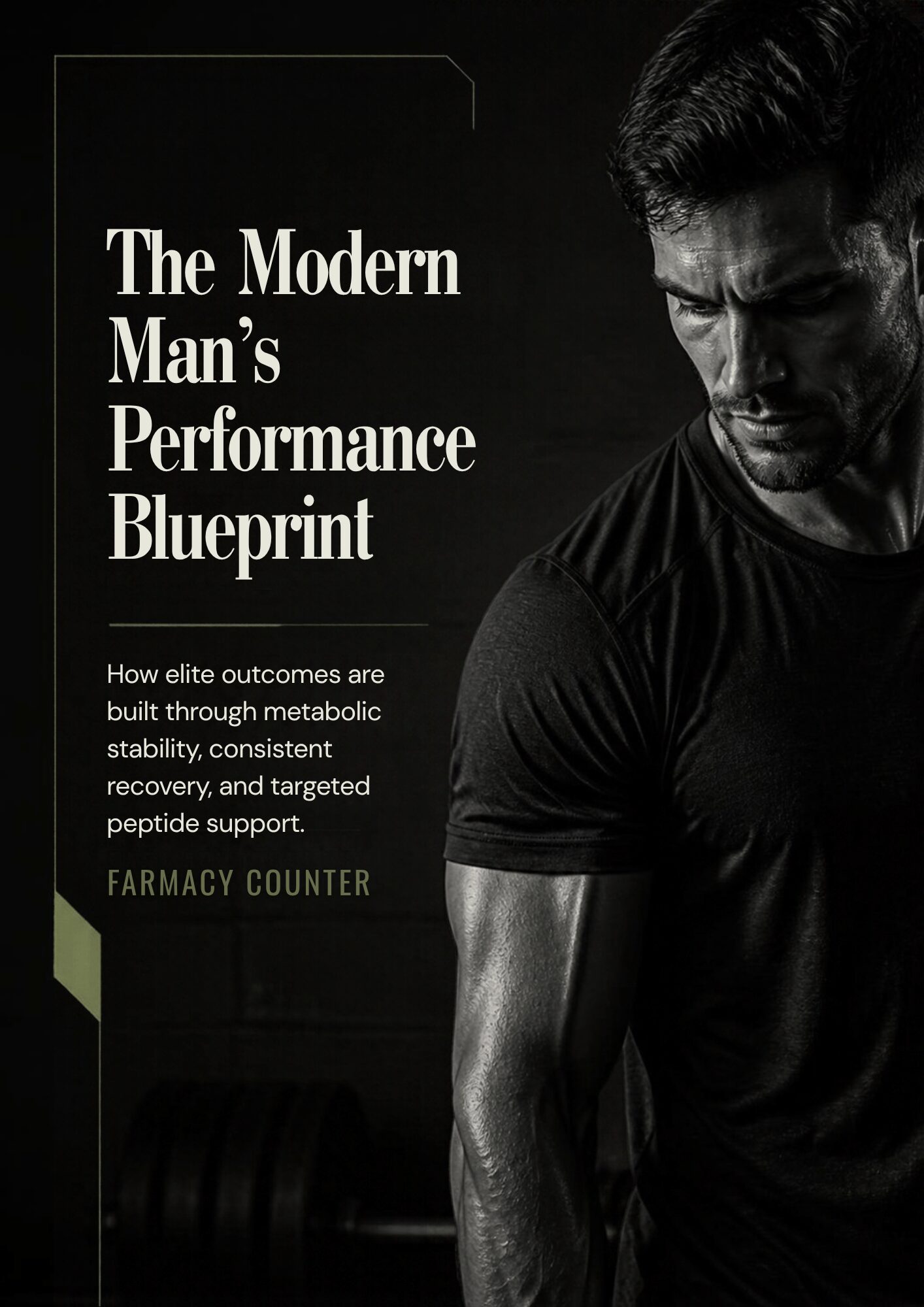
The Modern Man’s Performance Blueprint covers the lab markers, hormonal drivers, and lifestyle levers that actually determine body composition, energy, and performance, including what to test and what to optimize first.
Free instant download. No spam, unsubscribe anytime.
If this pattern sounds familiar (consistent training, reasonable nutrition, stalled results), there’s a workup worth doing. A comprehensive metabolic and hormonal evaluation in men typically includes:
| Marker | Why It Matters |
|---|---|
| Total and free testosterone + SHBG | How much testosterone is actually bioavailable |
| LH and FSH | Whether suppression starts in the testes or upstream in the hypothalamic-pituitary axis |
| Cortisol (4-point diurnal) | The daily rhythm, not just a single morning value |
| Fasting insulin and HOMA-IR | Insulin resistance, which compounds with alcohol-related metabolic disruption |
| IGF-1 | A downstream marker of growth hormone activity over time |
| CMP and liver enzymes | Alcohol’s effects on liver function, relevant even at moderate intake |
| Sleep assessment | Baseline sleep quality, since alcohol’s effect on body composition runs through sleep |
This isn’t about assigning blame or making a case for abstinence. It’s about having the full picture. You cannot optimize what you haven’t measured, and the variables quietly affecting your results are often the ones that never get looked at.
Pay attention to your recovery on nights you drink versus nights you don’t:
Most men who do this systematically for two weeks come back with the same observation: the difference is larger than they expected. Not because alcohol is uniquely destructive, but because the overnight recovery process is more consequential than most people account for, and alcohol disrupts it at exactly the wrong point.
This isn’t about giving up alcohol. It’s about understanding the trade-off clearly enough to make an informed decision about it.
If you want a complete picture of what’s happening hormonally and metabolically, a discovery call is where we start. We’ll review your history, your goals, and whether a functional medicine workup makes sense for where you are.
Book a Discovery Call →Yes. Classic sleep-lab research found that evening alcohol can suppress nighttime growth hormone release by as much as about 70 percent, with the size of the effect depending on how much was consumed. Growth hormone is released in pulses during deep sleep and supports muscle repair and fat metabolism.
Alcohol is sedating, so falling asleep is easier and the first half of the night can feel more consolidated. As blood alcohol falls, the second half shifts: REM sleep is suppressed and deep sleep becomes fragmented.
Regular alcohol use over time can suppress testosterone through its effects on the hypothalamic-pituitary-gonadal axis, and heavier drinking can lower it acutely. For men already at the lower end of the normal range, this can be clinically meaningful.
It can. Two nights a week adds up to roughly 100 nights a year where overnight recovery may be running at partial capacity, which can show up as slower muscle gains, plateaued fat loss, or stalled training performance.
A comprehensive men's workup can include total and free testosterone with SHBG, LH and FSH, a 4-point cortisol rhythm, fasting insulin and HOMA-IR, IGF-1, a comprehensive metabolic panel with liver enzymes, and a sleep assessment.
For educational purposes only. Not a diagnosis, and not a substitute for care from your healthcare provider. If you’re concerned about your drinking, talk with your provider.