
Two people can both say “I’m exhausted” and need completely different next steps. The shape of your day is one of the best clues to which one you are.
Alert in the morning, winding down by bedtime
Three alarms, coffee, and your brain still loading
Dragging at 10 a.m., ready to reorganize the pantry at 10:38 p.m.
Energy that jumps around with meals, pain, conflict, or poor sleep
Most people recognize themselves in one of these right away. That’s not a coincidence. Your energy across the day follows a rhythm, and cortisol is one of the main hormones setting it.
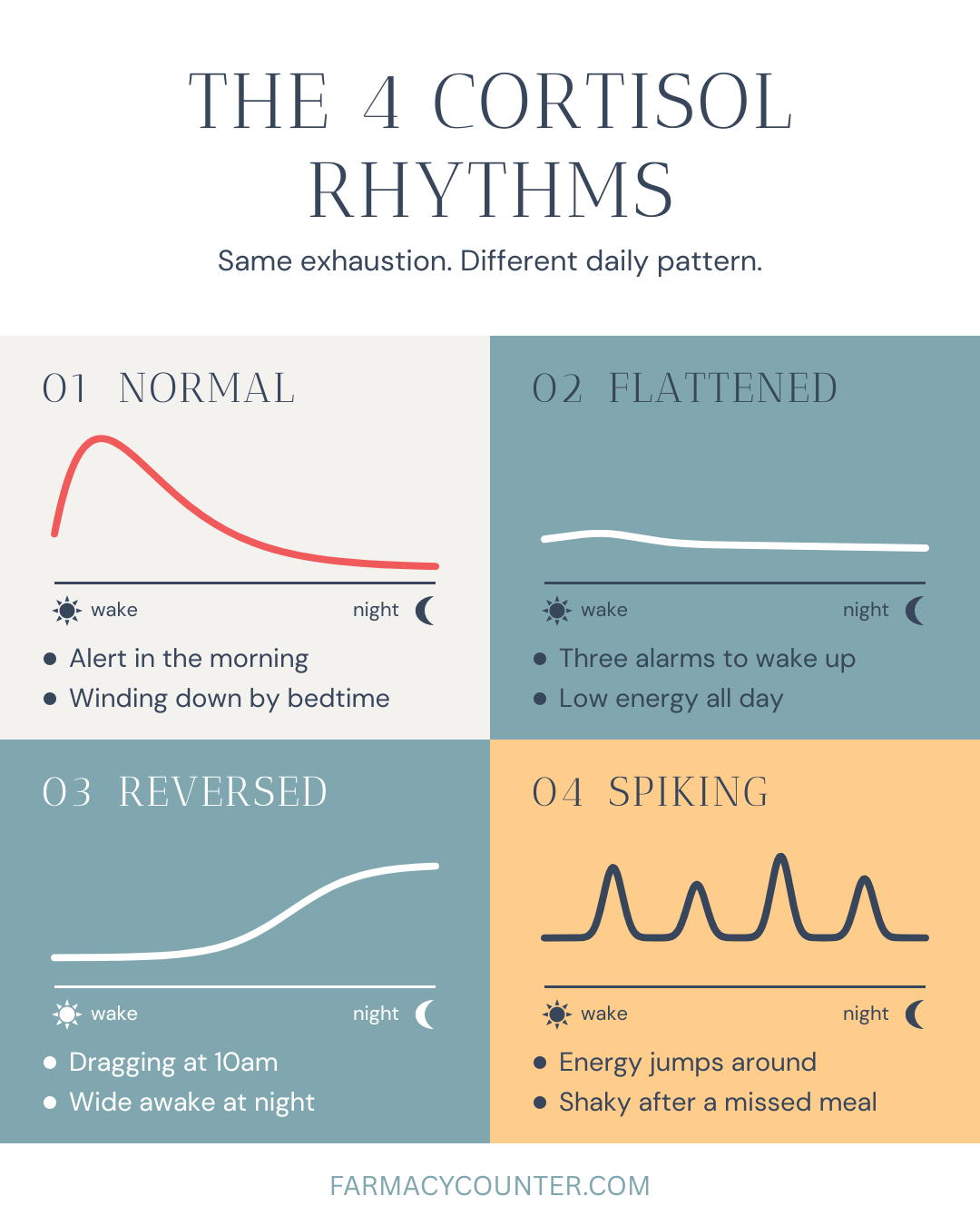
Cortisol usually follows a daily rhythm, run by your body’s internal clock.[1] Here’s what a typical day looks like:
Cortisol starts rising before you even open your eyes.
It often climbs a bit more. This is called the cortisol awakening response, and it’s part of what helps you feel ready to get up.[2]
It gradually drifts down.
It reaches its lowest point, so melatonin can take over and you can sleep.
That curve matters more than any single number. Research suggests that a flatter curve across the day, rather than one high or low level, is linked with poorer mental and physical health over time.[3]

Carefully timed testing can describe your curve in a few common ways. Here’s what each one tends to feel like.
What it feels like
You wake up reasonably alert, have steady energy through the day, and start winding down naturally in the evening.
This is the curve we’re aiming for. It doesn’t mean you’ll never feel tired. It means your rhythm is doing its job.
What it feels like
Three alarms to wake up, coffee before you can form a sentence, and low energy all day with no real peaks.
The curve has lost its shape. The morning rise is smaller than it should be, and it stays fairly flat from there. This often shows up after a long stretch of stress, short sleep, illness, or under-eating.
What it feels like
Dragging at 10 a.m., then wide awake and productive at 10:38 p.m.
The whole rhythm runs late, so you’re most switched on when you should be winding down. Irregular sleep times, late nights, and evening screens can all push your body clock later.[4] So can shift work. (An evening wind-down routine can help pull it back.)
What it feels like
Energy that jumps around. You’re fine, then suddenly shaky after a missed meal, wiped out after a tense conversation, or dragging after a bad night.
Instead of one smooth curve, there are several bumps through the day, often tied to blood sugar dips, pain, conflict, or poor sleep. When blood sugar drops, your body releases cortisol and adrenaline to bring it back up, which can feel shaky and jittery.[5] More in your anxiety might be a blood sugar event.
If you saw yourself in one of the off-rhythm curves, the Cortisol Rhythm Decoder walks you through it in more detail. In about five minutes, you’ll see what each pattern feels like, the common root causes worth looking into, why a single morning blood test can’t see it, and which testing actually shows your rhythm.
Here’s why I care about the shape. Three people can all tell me “I’m exhausted”:
That makes me think about sleep quality, like apnea or a flat morning rise.
That points toward a later rhythm and what’s keeping the evening switched on.
That sends me to blood sugar and meal timing first.
Same word, three very different starting points.
An Important CaveatThese curve descriptions are useful clues. They are not a diagnosis on their own.
A single cortisol number is one frame from a 24-hour movie. Even a full-day test depends on careful timing. Collecting a morning sample 20 minutes late can change what the curve looks like.[6] That’s why I want three things before deciding what any result means:
I always look beyond cortisol, because plenty of other things can feel almost exactly the same:
| Look-alike | How it can mimic a cortisol pattern |
|---|---|
| Sleep apnea | Unrefreshing sleep, morning headaches, and daytime fatigue that looks like a flat curve. It’s common and often missed.[7] |
| Anemia | Low iron or low red blood cells can cause fatigue, breathlessness, and a racing heart. |
| Thyroid disease | An underactive thyroid can feel flat and heavy. An overactive one can feel wired. See the stress-thyroid pattern. |
| Medication effects | Some medications affect sleep, energy, or blood sugar. More on that below. |
| Depression | Can cause low energy, trouble waking, and changes in sleep that look a lot like a flatter curve. |
| Daily pain | Breaks up sleep and keeps the stress system busy. |
| Shift work | Puts your rhythm out of step with the clock by design, so a “later” curve may simply match your schedule. |
That’s why the curve is a starting point, not the finish line. (If your tiredness doesn’t seem to have an obvious cause, read the stress you don’t count.)
If you’re doing a cortisol rhythm test, a few things can throw off the results. Here’s what I check:
Please don’t stop a medication to get a cleaner test. Talk with your prescriber first.
If you’d like extra support while you work on your rhythm, these are the options I trust for supporting steady energy and restful sleep. Check with your pharmacist or provider first, especially if you take other medications.
Available through my Fullscript dispensary. Farmacy Counter may earn a commission on purchases.
It’s worth checking in with your provider if:
Get prompt care for unexplained weight loss, fainting, very low blood pressure, darkening skin, or a rounded, flushed face with easy bruising. These can be signs of true adrenal disease, which needs a medical diagnosis.
One number can’t show you the shape of your day. On a free discovery call, we’ll walk through your timing, your symptoms, and your full health picture, look at any labs you’ve had in context, and talk through which testing would actually show your rhythm. If you haven’t yet, grab the free Cortisol Rhythm Decoder first.
Book Your Free Discovery Call →To your health and vitality, Dr. Ryan
Cortisol usually rises around waking, climbs a bit more in the first 30 to 45 minutes, then drifts down through the day and reaches its lowest point at bedtime. Exact numbers depend on the lab and the type of test.
It means cortisol doesn’t rise much in the morning and stays fairly level all day. It often comes with trouble waking and low energy, but it’s a clue rather than a diagnosis on its own.
A later rhythm can come from irregular sleep times, late nights, evening screens, shift work, or ongoing stress. It often feels like dragging in the morning and wide awake at night.
No. A single blood draw shows one moment. A test that measures cortisol several times across one day, from saliva or dried urine, is needed to see the shape.
No. A rhythm pattern describes how cortisol moves across your day. It isn’t a diagnosis, and it doesn’t mean your adrenal glands are worn out.
For educational purposes only. Not a diagnosis, and not a substitute for care from your healthcare provider. Do not start, stop, or change any medication or supplement without talking with your provider or pharmacist.