

If you’ve been told you have fatty liver — or if your labs are trending toward it — the most important thing to understand is this: the liver is where the problem shows up, not where it starts.
Fatty liver is the downstream result of a metabolic system that has been sending distorted signals for a long time. Elevated triglycerides, creeping fasting insulin, unexplained weight resistance despite eating carefully — these are the early signs. The liver is simply the first organ to visibly reflect them.
The encouraging part: fatty liver is largely reversible. But not the way most people attempt it. Aggressive calorie restriction, carb elimination, and detox protocols often produce short-term liver fat reduction with long-term metabolic worsening. The liver improves when metabolism improves — not when you starve it.
What’s Actually Happening in a Fatty Liver
The medical term has changed. Fatty liver is now classified as metabolic dysfunction–associated steatotic liver disease, or MASLD — a name that more accurately reflects what it is: a metabolic condition that manifests in liver tissue.
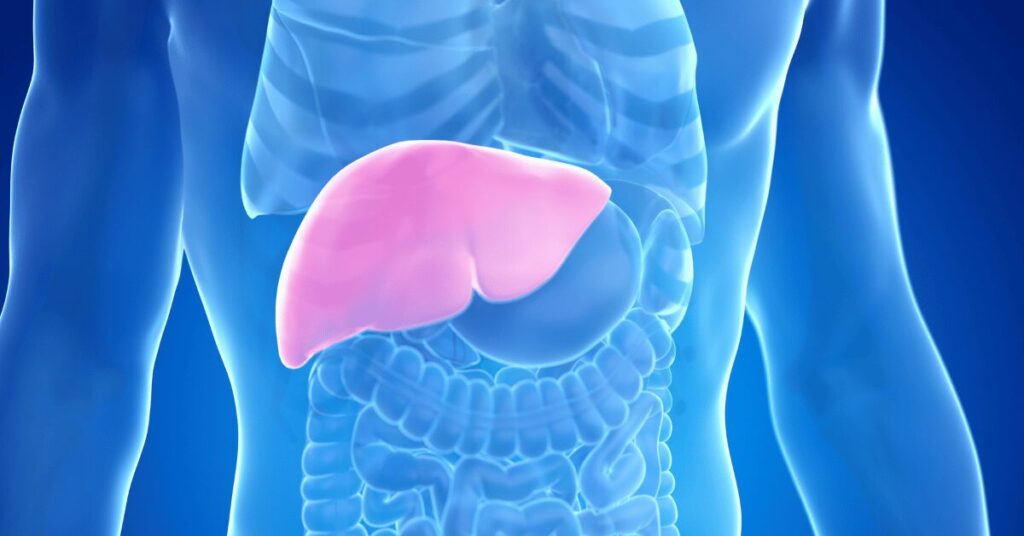
The liver is responsible for far more than detoxification. It regulates blood sugar, clears insulin from circulation, stores and releases glycogen, packages and exports triglycerides, and coordinates fuel distribution across the entire body. When excess energy consistently outpaces the liver’s ability to process or export it, triglycerides accumulate inside liver cells.
Over time, this changes how the liver responds to insulin and glucose — and that’s when the ripple effects begin.
Why Fatty Liver Makes Fat Loss So Difficult
When the liver becomes insulin resistant, something counterintuitive happens: it continues releasing glucose into the bloodstream even when insulin levels are already elevated. The pancreas responds by producing more insulin to compensate.
That chronically elevated insulin does two things. It suppresses fat oxidation — your body’s ability to burn stored fat for fuel. And it promotes fat storage, particularly in the abdominal region. At the same time, the liver ramps up VLDL production, which raises circulating triglycerides. Those triglycerides then impair insulin signaling in muscle tissue, spreading insulin resistance beyond the liver.
The result is a system that has turned against itself:
- Higher baseline insulin
- Reduced capacity to burn fat
- Stronger tendency toward fat storage
- Greater metabolic rigidity overall
This is why people with unaddressed hepatic insulin resistance often experience stubborn abdominal fat, energy crashes, dramatic weight fluctuations with even small dietary changes, and genuine difficulty losing weight despite doing everything right by conventional standards. Their metabolism is not broken — it is responding logically to broken upstream inputs.
If this pattern sounds familiar — stubborn abdominal fat, weight that won’t move despite doing everything right, energy that doesn’t match your effort — the Weight Resistance Decoder walks through the most common metabolic drivers behind fat loss resistance, including hepatic insulin resistance. Download it below.
How Fatty Liver Develops — Even Without Alcohol
Non-alcoholic fatty liver is far more common than most people realize, and it does not require obesity or heavy drinking to develop. It frequently develops from:
- Chronic insulin elevation from repeated snacking or high-glycemic eating patterns
- Cycles of aggressive dieting and refeeding
- High intake of refined carbohydrates, particularly fructose
- Prolonged sedentary behavior
- Chronic stress and elevated cortisol
- Genetic susceptibility — some individuals store liver fat at lower metabolic thresholds than others
Critically, liver enzymes (AST and ALT) often remain normal in early-stage fatty liver, which is why it goes undetected until metabolic symptoms escalate. By the time enzymes are elevated, the condition has typically been present for years.
There is one further complication worth knowing. When liver fat accumulates persistently, fat can also begin depositing in the pancreas. Pancreatic fat impairs insulin secretion — adding another layer of dysfunction on top of insulin resistance. A localized liver condition can evolve, quietly, into a broader endocrine problem. Early intervention matters

Why Extreme Dieting Often Backfires
The reflexive response to a fatty liver diagnosis is often aggressive restriction: cut calories drastically, eliminate carbohydrates, pursue rapid weight loss. In the short term, liver fat does decrease with caloric restriction. But the metabolic drivers — insulin resistance, chronic inflammation, stress signaling dysregulation — typically remain.
Aggressive restriction also elevates cortisol, accelerates muscle breakdown, and worsens long-term insulin signaling. Many people who lose weight rapidly through extreme diets find that the weight returns quickly, and that each subsequent attempt yields diminishing results. This is not a willpower problem. It is a physiology problem.
Reversal is not about eating less. It is about restoring the conditions under which your metabolism can function correctly.
What Actually Reverses Fatty Liver
Effective reversal focuses on improving insulin sensitivity and restoring hepatic function — not simply reducing caloric intake. The key components:
Reduce chronic insulin elevation. Fasting insulin is the most important lever. This often involves adjusting meal timing and composition, improving protein adequacy (which has a favorable effect on satiety and insulin response), and reducing the constant snacking patterns that keep insulin elevated all day.
Build skeletal muscle. Muscle is the primary site of glucose disposal. More muscle mass means more capacity to clear glucose from the bloodstream — which reduces insulin demand, which reduces fat storage signaling. Resistance training is not optional for metabolic recovery.
Support fat oxidation at the cellular level. Mitochondrial efficiency determines how well the liver can burn fat rather than store it. Sleep quality, micronutrient status, and movement patterns all influence this directly.
Address inflammatory drivers. Gut-derived endotoxin, chronic psychological stress, poor sleep, and specific micronutrient deficiencies all contribute to hepatic inflammation — which worsens insulin resistance and slows fat export from liver cells.
Correct specific nutrient gaps. Choline, magnesium, and omega-3 fatty acids play direct roles in hepatic fat metabolism. Deficiencies in any of these impair the liver’s ability to export or oxidize fat effectively.
When these conditions are addressed together, liver fat typically reduces as a consequence — not a goal. And when it reduces:
- Fasting insulin normalizes
- Triglycerides drop
- Energy stabilizes and becomes more consistent
- Fat loss responds proportionately to nutrition and exercise inputs
- Metabolism becomes predictable again
The Best Foods to Heal a Fatty Liver
Food is not the only lever — but it is one of the most direct. The goal is not a restrictive list of “safe” foods. It is choosing foods that reduce chronic insulin elevation, support hepatic fat metabolism, and give the liver the raw materials it needs to repair itself.
Fatty fish and omega-3 rich foods. Salmon, sardines, mackerel, and other cold-water fish are among the most studied foods for hepatic fat reduction. Omega-3 fatty acids directly support the liver’s ability to export triglycerides rather than accumulate them. If fatty fish is not a consistent part of your diet, high-quality fish oil supplementation is worth considering — but food first.
Cruciferous vegetables. Broccoli, cauliflower, Brussels sprouts, and cabbage support Phase 1 and Phase 2 liver detoxification pathways. They also contain compounds that help regulate fat synthesis in the liver and reduce inflammatory signaling. These are foundational — not optional.
Eggs and choline-rich foods. Choline is essential for packaging and exporting fat from liver cells. Without sufficient choline, fat accumulates even when intake is otherwise appropriate. Eggs are one of the best dietary sources, along with beef liver and shrimp. Choline deficiency is one of the most overlooked contributors to fatty liver — and it is remarkably common.
Olive oil. Extra virgin olive oil is not just an anti-inflammatory fat — it has been shown to improve insulin sensitivity and reduce hepatic fat accumulation directly. Use it as your primary cooking and finishing fat, replacing refined seed oils where possible.
Berries and colorful produce. Blueberries, raspberries, and other polyphenol-rich fruits reduce hepatic oxidative stress and improve mitochondrial function in liver cells. The goal is variety and density — not volume. A handful of berries is genuinely meaningful.
Lean protein at every meal. Adequate dietary protein supports satiety, stabilizes insulin response, and reduces the drive to snack between meals — which is one of the most effective ways to lower baseline insulin over time. Chicken, turkey, fish, eggs, and legumes all support this.
Coffee. This one surprises people. Regular coffee consumption is consistently associated with lower rates of fatty liver progression and reduced hepatic inflammation. The mechanism appears to involve polyphenols, not caffeine specifically. Two to three cups of black or lightly sweetened coffee per day appears to be genuinely protective.
What to reduce. Equally important: fructose. High-fructose corn syrup, sweetened beverages, fruit juice, and excess alcohol are metabolized almost entirely in the liver and are among the most direct drivers of hepatic fat accumulation. Reducing these is not a trend — it is liver physiology.
A note on the bigger picture: No individual food reverses fatty liver in isolation. The pattern matters more than any single item — consistent protein, minimal refined carbohydrates, adequate micronutrients, and a meal structure that keeps insulin from staying elevated all day. Food is the strategy. Labs over time confirm whether it is working.

The Lab Pattern That Points to Fatty Liver Before Imaging Does
Fatty liver does not always announce itself through dramatically elevated liver enzymes. Earlier warning patterns in routine labs often include:
- Elevated fasting insulin (often the earliest and most sensitive marker)
- Triglycerides above 100–150 mg/dL
- Low HDL cholesterol
- A high triglyceride-to-HDL ratio (above 3:1 is clinically significant)
- Mildly elevated fasting glucose, even within the “normal” range
- Elevated GGT — often overlooked but closely tied to hepatic fat accumulation
- Increasing waist circumference without significant weight change
No single number tells the story. The pattern, and the direction of travel over time, is what matters. These markers can reflect hepatic insulin resistance well before an ultrasound confirms fatty infiltration.
Fatty Liver Is Not the Only Driver of Fat Loss Resistance
Hepatic insulin resistance is common — but it is not universal. Some individuals who experience identical symptoms are primarily dealing with leptin resistance. Others are driven by HPA axis dysregulation from chronic stress. Others have gut-mediated inflammation as the primary upstream cause.
The surface presentation can look nearly identical. The internal drivers are different. And the resolution strategy for each is different, which is why generic advice tends to produce inconsistent results for people whose metabolic picture has become genuinely complex.
Understanding which pattern you’re actually in is more valuable than any single dietary intervention.
Where to Start
If you have elevated triglycerides, rising fasting insulin, persistent abdominal fat, or genuine fat loss resistance despite structured nutrition — it is worth determining whether hepatic insulin resistance is part of your picture.
Our personalized Metabolic Assessment reviews your full symptom and lab pattern to identify your most strategic starting point. After review, our team provides clear guidance — whether that involves targeted testing, a focused program, or a strategy session to map out next steps.
Fatty liver is not a permanent condition. It is a reversible signaling problem. When the liver begins functioning efficiently again, the rest of metabolism tends to follow.
If you are ready to stop guessing and start understanding your metabolic pattern, begin with the Metabolic Assessment here.