
Your gut bacteria are involved in your hormone levels.
Not metaphorically. Biochemically.
There is a specific community of gut microbes called the estrobolome that directly governs how much estrogen recirculates in your body. It controls whether estrogen that has been processed by your liver gets cleared from your system or reabsorbed back into circulation. And it does this through a measurable, specific, well-researched mechanism.
Most hormone workups — including gynecology panels, endocrinology assessments, and standard bloodwork — never assess it. Most hormone protocols never address it.
This means that many cases of estrogen dominance, low estrogen symptoms, PMS, endometriosis, PCOS, hormonal acne, and perimenopausal hormone fluctuation have a significant gut component that goes completely unexamined. You’ve been working on your hormones without anyone looking at the system that’s partially running them.

What the Estrobolome Actually Is
The estrobolome is the collection of gut bacteria that produce beta-glucuronidase — an enzyme that plays a central role in estrogen metabolism. It isn’t a single species or a specific supplement. It’s a functional community of microorganisms whose collective activity determines the fate of estrogen in the gut.
To understand why this matters, you need to understand how estrogen normally moves through the body.
Estrogen is produced primarily in the ovaries, adrenal glands, and fat tissue. After it circulates and exerts its effects, it travels to the liver to be processed. The liver conjugates estrogen — attaches a molecule to it that makes it water-soluble and ready for excretion. This conjugated estrogen is then released through bile into the small intestine, where it moves toward the colon for elimination.
That’s the plan. But the gut has other ideas — or more precisely, the bacteria in your gut have other ideas.
The Beta-Glucuronidase Mechanism
In the gut, the enzyme beta-glucuronidase determines what happens to that conjugated estrogen.
When beta-glucuronidase activity is high, it cleaves the molecule that the liver attached to estrogen — deconjugating it, making it fat-soluble again, and allowing it to be reabsorbed through the intestinal wall back into circulation.
When beta-glucuronidase activity is lower, estrogen stays conjugated, stays water-soluble, and gets excreted in stool as intended.
The bacteria in your estrobolome control beta-glucuronidase levels. When dysbiosis shifts the microbial balance toward species that overproduce beta-glucuronidase, more estrogen gets deconjugated and recirculated. When the estrobolome is healthy and diverse, estrogen clearance proceeds normally.
The gut is not separate from the hormonal system. It is part of it.

When Dysbiosis Drives Estrogen Dominance
When gut dysbiosis increases beta-glucuronidase activity, the result is elevated circulating estrogen — not because the ovaries are overproducing it, but because the gut is reabsorbing estrogen that should have been cleared.
This creates elevated estrogen levels without any structural ovarian issue. Conventional hormone testing, including serum estradiol, may show elevated or high-normal estrogen. Ovarian function looks completely normal. Ovarian reserve is fine. Everything checks out — except the gut has never been looked at.
The downstream symptoms are exactly what you’d expect from estrogen dominance:
- Heavy or painful periods that have worsened over time.
- Breast tenderness and cyclical breast pain.
- Significant PMS — mood changes, irritability, bloating — in the week before menstruation.
- Worsening endometriosis, because endometrial tissue is estrogen-sensitive and excess circulating estrogen drives its growth.
- Fibroid development or enlargement over time, for the same reason.
These are the people who come in having been told their estrogen levels are “a little high” or within normal range, who have been put on progesterone supplementation or hormonal birth control to manage symptoms, and who feel partially better but never fully resolved. The gut component was never addressed because nobody looked there.
When Dysbiosis Suppresses Estrogen
The relationship between the estrobolome and estrogen runs in both directions — a point that’s often missed.
Dysbiosis doesn’t only drive estrogen dominance. It can also suppress estrogen availability — a particularly significant issue in perimenopausal and postmenopausal people, and in anyone with low microbial diversity.
In perimenopause, the ovaries are producing less estrogen. The body has less to work with. In this context, the estrobolome’s role in recycling estrogen becomes more important — because the body is relying on that recirculation to maintain estrogen levels. When low microbial diversity impairs the estrogen recycling that the body is still trying to use, available estrogen drops further.
The symptoms that follow look exactly like accelerated estrogen decline: vaginal dryness and discomfort, joint pain and stiffness — estrogen has anti-inflammatory effects and its decline worsens joint symptoms — sleep disruption, mood instability, cognitive changes, and the accelerated bone density loss that comes with chronically low estrogen.
What makes this clinically significant is that these symptoms can appear even when ovarian function appears completely normal — or when hormone replacement therapy isn’t producing the expected results, because the gut isn’t clearing and recycling estrogen efficiently.
The gut is not separate from the hormonal system. It is part of it.

The Gut-Hormone Connection Beyond Estrogen
While the estrobolome primarily governs estrogen metabolism, the gut-hormone relationship extends further than most people realize.
Testosterone and androgens are also affected by gut bacterial balance. Certain bacteria, through their influence on SHBG (sex hormone-binding globulin) and androgen metabolism, affect how much free testosterone is available. This is part of the mechanism behind gut-driven hormonal acne — dysbiosis shifts androgen metabolism in ways that drive sebaceous gland overactivity. People with persistent hormonal acne who address their gut microbiome often see skin improvement that years of topical treatment never produced, because the driver was internal and microbial.
Cortisol and the HPA axis are regulated in part by gut bacteria through their production of short-chain fatty acids and their influence on the vagus nerve. Chronic dysbiosis creates ongoing low-grade inflammation that dysregulates cortisol rhythm — contributing to the morning anxiety, afternoon crashes, and sleep disruption that accompany gut imbalance.
Thyroid hormones are also subject to gut influence. Like estrogen, thyroid hormones undergo enterohepatic circulation — processed by the liver, released into bile, and subject to deconjugation by gut bacteria. Dysbiosis can impair thyroid hormone conversion and reabsorption, contributing to hypothyroid symptoms even when TSH is within normal range.
Insulin sensitivity is directly modulated by short-chain fatty acids produced by healthy gut bacteria. When beneficial bacteria are depleted, SCFA production drops, insulin sensitivity decreases, and blood sugar regulation becomes less precise.
The gut isn’t just a digestive organ. It’s an endocrine regulator.

What Gets Missed When You Only Treat the Hormones
I see this pattern regularly: people who have spent years managing PCOS, endometriosis, or hormone imbalance without anyone ever running gut testing. They’ve been through hormone panels, gynecology workups, endocrinology assessments. They may be on hormonal birth control or hormone replacement therapy or progesterone supplementation.
Some feel better. Most feel partially better. Some don’t respond as expected. And in almost every case, the gut — the system through which their estrogen is being cleared and recirculated — has never been examined.
The gut is where estrogen goes to be cleared. If that clearance system is disrupted, every hormone intervention is being done with half the map.
This doesn’t mean hormone treatment is wrong. It means that treating hormones without addressing the gut leaves a major driver unaddressed — and the symptoms either persist, partially respond, or return when treatment is modified.
How We Actually Test the Estrobolome
The estrobolome isn’t assessed on a standard hormone panel. Serum estradiol tells you how much estrogen is circulating. It doesn’t tell you why — whether it’s from overproduction, impaired clearance, or gut reabsorption.
To actually assess the estrobolome and gut-hormone axis, three tests provide the most complete picture:
Comprehensive stool testing (GI-MAP or equivalent) shows beta-glucuronidase levels directly. This is the most direct measurement of whether the estrobolome is overdriving estrogen reabsorption. It also shows the full microbial landscape — which bacteria are present, which are overgrown, which are depleted — giving context for why beta-glucuronidase activity is elevated or suppressed.
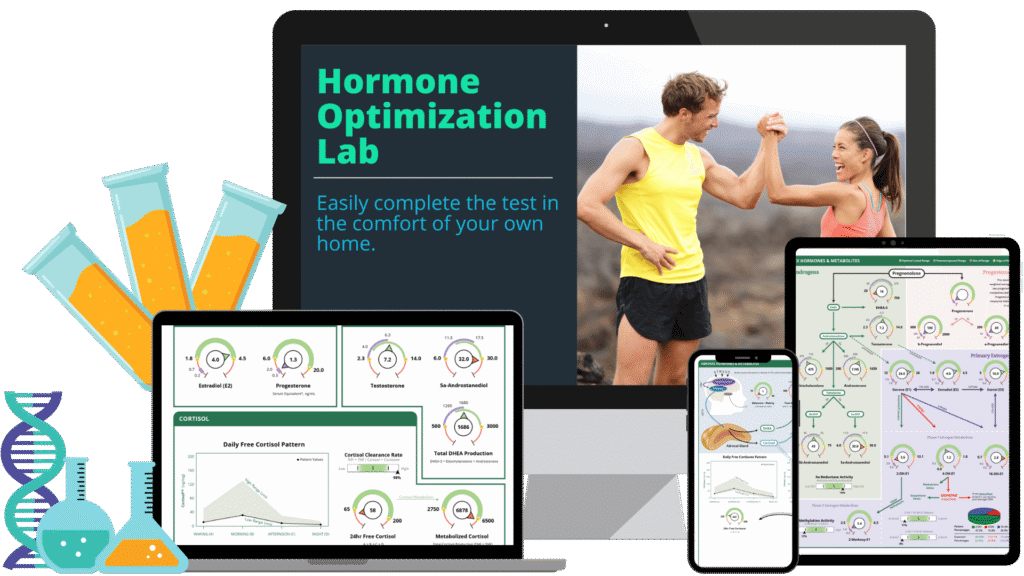
The DUTCH test (Dried Urine Test for Comprehensive Hormones) maps estrogen metabolite ratios — specifically the 2-OH versus 16-OH estrone ratio, which tells us how estrogen is being processed and cleared. Favorable 2-OH metabolites are protective. Elevated 16-OH metabolites are associated with higher estrogenic activity and increased risk. The DUTCH also shows cortisol rhythm, progesterone metabolites, and androgen metabolism in a level of detail that serum testing can’t provide.
Microbiome diversity markers from comprehensive stool testing tell us about the overall health of the estrobolome population. Low diversity means the microbial community governing estrogen metabolism is compromised — which matters whether the clinical picture is estrogen dominance or estrogen insufficiency.
These three tests together give a picture that serum estrogen levels alone could never provide.
What Actually Helps — and Why It Depends on Your Data
There are several interventions that support healthy estrobolome function. But which ones, at what dose, in what order, depends entirely on what your testing shows.
Calcium D-glucarate inhibits excess beta-glucuronidase activity and supports estrogen clearance. It’s most useful when beta-glucuronidase is elevated — when the gut is reabsorbing too much estrogen. It doesn’t make sense and could be counterproductive in someone with low estrogen whose gut-hormone picture is suppression rather than dominance.
DIM (diindolylmethane), derived from cruciferous vegetables, supports favorable estrogen metabolite ratios — shifting metabolism toward the protective 2-OH pathway. It’s most useful when the DUTCH test shows unfavorable metabolite ratios. Used without that context, DIM can shift estrogen metabolism in ways that aren’t appropriate for the individual’s specific picture.
Specific Lactobacillus strains — particularly Lactobacillus acidophilus and Lactobacillus reuteri — support estrobolome diversity and beta-glucuronidase regulation. But strain matters enormously. A generic probiotic blend isn’t the same as targeted strain selection based on what the comprehensive stool analysis shows is depleted.
Fiber diversity feeds the bacteria that maintain gut-hormone balance. Specifically, prebiotic fibers — inulin, FOS, resistant starch — selectively feed Bifidobacterium and other beneficial species that support healthy estrobolome composition. The caveat: adding aggressive fiber to a gut with active SIBO or significant dysbiosis feeds the problem before it feeds the solution. Sequencing matters.
The same intervention that helps one person can be counterproductive for another. This is why testing before treating is the foundation of this work.

Why This Changes the Hormone Conversation
If you’ve been managing hormonal symptoms — heavy periods, PMS, endometriosis, PCOS, perimenopausal transitions, hormonal acne, fibroid growth — without anyone ever looking at your gut, you’ve been working with half the picture.
Not because your gynecologist or endocrinologist is wrong. But because the system that clears and recirculates your estrogen is in your gut, and the gut is outside the scope of most hormone workups.
The estrobolome is assessable. Beta-glucuronidase is measurable. Estrogen metabolite ratios are trackable. The microbiome is testable. And when you address the gut component of hormonal imbalance — not instead of treating the hormones, but alongside it — the results are consistently more complete than treating hormones alone.
→ Download the free Bloating Body Map to start identifying whether gut dysfunction is contributing to your hormonal symptoms — bloating that worsens before your period, lower abdominal distension, and estrogen-related motility changes all have a gut origin worth understanding.
Ready to find out if your gut is affecting your hormones? Complete our Digestive Health Assessment and our team will review your full symptom profile — including hormonal patterns — to determine your most strategic next step.
→ Start Your Digestive Health Assessment
After reviewing your responses, we’ll recommend the right path forward — whether that includes functional gut testing, a targeted protocol, or a personalized strategy session.
Your hormones have a gut component. It’s time to look at the whole picture.