
Symptoms coming back on hormone therapy this season? Here are the common holiday causes, what to check, and how to stay steady without changing your dose.
You’ve been feeling good.
Sleeping better. More energy. Your mood leveling out. And then the holiday season hits, and by mid-December you feel a lot like you did before you started.
And then the thought creeps in: “I thought hormone therapy was supposed to fix this.”
I want you to hear this first: symptoms returning during the holidays doesn’t mean your hormone therapy has stopped working, and it doesn’t mean you did something wrong. Very often, it’s the season, not the plan. And a lot of the causes are fixable.
Very often, it’s the season, not the plan.
This post covers the practical things I see as a pharmacist that quietly derail hormone therapy during the holidays, what stress and short sleep can do, what else to rule out, and how to stay steady. It’s educational and not a substitute for care from your own healthcare team. Please don’t change your dose or stop your hormone therapy on your own.

Before blaming your hormones or your stress, check the basics. These are the most common reasons symptoms come back in November and December, and they have nothing to do with whether your plan is right.
Pharmacies close early or shut for the holiday, mail gets delayed, and insurance may not allow an early refill. If your supply runs out or you stretch it, symptoms can return fast. Refill early, ideally two weeks before you need it. Ask your pharmacy about a 90-day supply if your plan allows, and ask your insurer about a “vacation override” if you’re traveling. Compounded products can take longer to prepare, so plan extra time.
Time zones, late nights, and changed routines make it easy to forget a pill, a patch change, or a gel application. Set a phone reminder, and pack your medication in your carry-on, in its original labeled container, plus a few extra days’ worth in case of delays.
Hot baths, saunas, hot tubs, and heating pads can loosen a patch, and heat may increase how much hormone you absorb from some patches. Check your patch’s label, and ask your pharmacist what’s right for yours. If a patch falls off, don’t guess. Call your pharmacist or prescriber for what to do.
Let them dry before dressing, and ask your pharmacist how long to wait before swimming or bathing. If you hug kids or a partner during the day, ask how to avoid transferring the hormone to them.
If you take oral progesterone at night, it can cause drowsiness. Alcohol can add to that, so go easy on the holiday drinks.
Late nights, extra alcohol, and big meals can all make you feel worse, even when your dose is exactly what it should be. (Holiday meals hit differently in midlife, too.)
Even when your dose is steady, stress and poor sleep can turn the volume up on the symptoms you were trying to quiet.
They vary from week to week, and they’re associated with things like stress, anxiety, and poor sleep.[1]
Menopause and perimenopause are linked to sleep problems, and the holidays often mean late nights, travel, and alcohol on top of that.[2][3]
When you’re short on sleep, the brain becomes more reactive to worry.[4] That’s why irritability and anxiety can return first. More on why anxiety can feel harder this time of year.
Illness and severe stress can lower the active thyroid hormone T3.[5] The evidence for ordinary holiday stress is modest, so I’d call this a possibility, not a given. If fatigue and brain fog are creeping back, it’s worth checking.
This is also why symptoms often settle once routines return. The season changed. Your plan didn’t.
If you’ve done the practical checks and symptoms are still back, I look at these:
If you’re newer to therapy, I cover what to expect in your first year here.
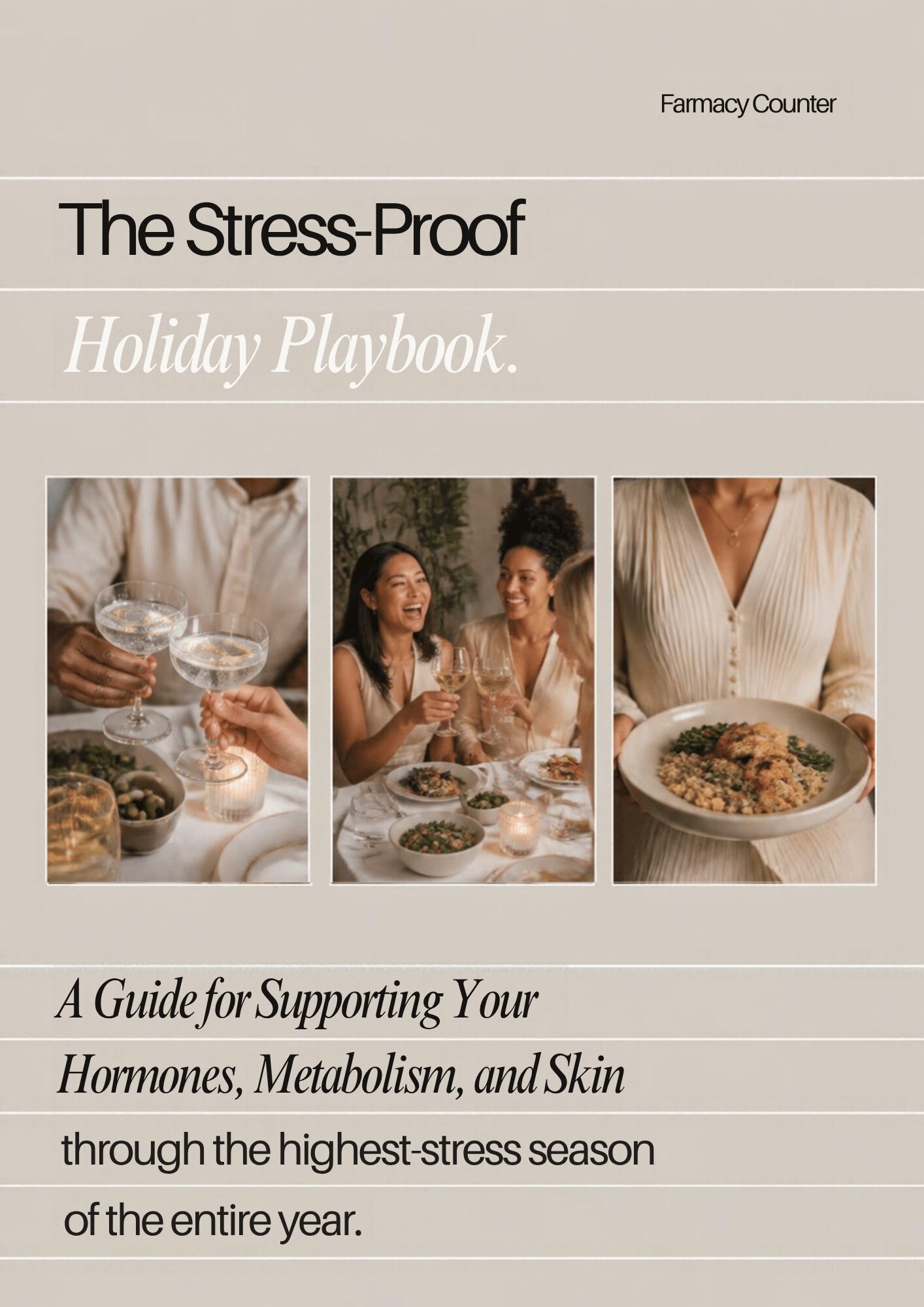
Getting ahead of the holidays makes a difference. My free Stress-Proof Holiday Playbook is a practical guide to supporting your hormones, metabolism, and skin through the busiest season of the year, so you can stay steady instead of sliding back.
There are non-hormonal options with evidence, such as cognitive behavioral therapy and clinical hypnosis, which your provider can discuss with you.[10]
Some supplements interact with medications, including hormone therapy and thyroid medicine. Magnesium is one people often ask about for sleep, and vitamin D is commonly low in midlife. Test first, and check with your provider before you start.
Available through my Fullscript dispensary. Farmacy Counter may earn a commission on purchases.
When someone tells me symptoms are returning on hormone therapy, I look at the whole picture:
I also use four working patterns from my hormone traffic report to organize what I find:
Wired at night, tired by day, poor sleep, high stress
Fatigue, low iron, B12, or other nutrients
Blood sugar swings, cravings, stubborn weight
Bloating, puffiness, alcohol hitting harder
These are clues that organize questions. They don’t diagnose a cause.
Please call your prescriber if your symptoms come back and don’t settle, if you run out of medication, or if you have bleeding that’s new or unexpected.
Call right away for chest pain, shortness of breath, sudden severe headache, sudden vision changes, weakness on one side, or swelling and pain in one leg, because these can be signs of a serious problem.
And if your mood is heavy and doesn’t lift, or you’re having thoughts of harming yourself, please reach out to your provider, a mental health professional, or emergency services right away.
Hormone therapy works inside a body that’s living through the busiest, most disrupted time of the year. A few practical steps, taken before the holidays take over your calendar, can help you stay steady. (If you’re weighing therapy in the first place, here’s what the research says about the benefits and risks.)
If you haven’t yet, start with the free Stress-Proof Holiday Playbook above. And if you’d rather talk through what you’ve been experiencing, I offer a free discovery call. No pressure, just a conversation about whether functional medicine is the right next step for you.
Book Your Free Discovery Call →To your health and vitality, Dr. Ryan
Very often it’s the season, not the plan. Refills that run out, missed or shifted doses while traveling, patches loosened by heat, and extra alcohol, late nights, and stress can all bring symptoms back even when your dose is right.
Not necessarily. Stress and short sleep can turn up hot flashes, sleep problems, and irritability even on a steady dose, and symptoms often settle once routines return. If they don’t settle, talk with your prescriber.
Heat can loosen a patch, and it may increase how much hormone you absorb from some patches. Check your patch’s label and ask your pharmacist what’s right for yours. If a patch falls off, call your pharmacist or prescriber rather than guessing.
Refill at least two weeks ahead, set reminders for doses and patch changes, and pack your medication in your carry-on in its original labeled container with a few extra days’ worth. Know your prescriber’s holiday hours in case symptoms flare.
No, don’t adjust it yourself. Hormone therapy is individualized and reassessed over time, so tell your prescriber what you’re noticing. Thyroid issues, low iron or B12, medications, and ongoing perimenopause can also be part of the picture.
For educational purposes only. Not a diagnosis, and not a substitute for care from your healthcare provider or a licensed mental health professional. Do not start, stop, or change any medication, supplement, or hormone therapy without talking with your prescriber.