
Stay steady through the holidays with a simple plan built on sleep, protein, movement, and boundaries, plus a week-by-week timeline.
The holidays are coming fast. Thanksgiving is November 26, and the calendar is already filling up: travel, gatherings, gifts, work deadlines, and family dynamics, all stacked on top of shorter days.
And if you’re like most of the women and men I talk to, you’ll say yes to everything, stay up late, skip the walk, eat whatever’s around, and tell yourself you’ll “get back on track in January.”
The people who feel their best through the holidays aren’t doing more. They’re doing the right things before the chaos starts.
This post gives you a simple plan built on four habits, a week-by-week timeline, and the practical things I check as a pharmacist and functional medicine practitioner. It’s educational and isn’t a substitute for care from your own healthcare team. Numbers in brackets point to the references at the end.

Holiday weight gain gets a lot of attention, but the research tells a more nuanced story. In a classic study, the average gain over the holiday season was small, under a pound, but it wasn’t lost afterward, and it made up much of the weight people gained over the whole year.[1] In other words, the holidays aren’t a disaster, but they matter more than their size suggests.
And the effects aren’t just on the scale. Stress that stays on for weeks affects sleep, blood sugar, mood, and immune function.[2] The holidays can stack all of it at once:
I cover the why in my posts on how the holidays affect your body and holiday weight gain. This post is the how.
You don’t need a perfect routine. You need four steady anchors.
The first thing to go in December, and the first thing I’d protect.
In one study, just two nights of short sleep in healthy young men shifted appetite hormones and increased hunger.[3] Late nights also make stress feel bigger and cravings louder.
Sleep can already be fragile, with night sweats and 3 a.m. wake-ups, so holiday disruption can hit harder.[5] More in perimenopause symptoms that get missed and why you can’t sleep.
Enjoy the food without the blood sugar roller coaster.
Holiday meals often swing toward sugar and starch. Building your plate around protein helps you feel full and satisfied,[6] and it helps keep your energy steadier.
This isn’t about restriction. It’s about enjoying the food and feeling good afterward. (Here are protein sources that support hormonal stability.)
A walk counts.
Light activity after a meal can lower the rise in blood sugar and insulin,[7] and regular movement is linked to lower anxiety and depression symptoms.[8]
This is the one that surprises people. Your calendar is a health decision.
Strong connections protect your health,[9] but connection isn’t the same as saying yes to everything. Boundaries help you protect your energy so you can show up for the people and moments that matter.
A Few Scripts You Can Borrow“We’d love to come for dessert, but we’ll head out by 8.”
“Thank you for asking. I’m not able to take that on this year.”
“We’re keeping it simple this year.”
“I’m going to skip the second drink, but I’ll have a sparkling water with you.”
You’re allowed to skip the event, leave early, or say no without a long explanation. More in how to set boundaries without feeling like the Grinch.
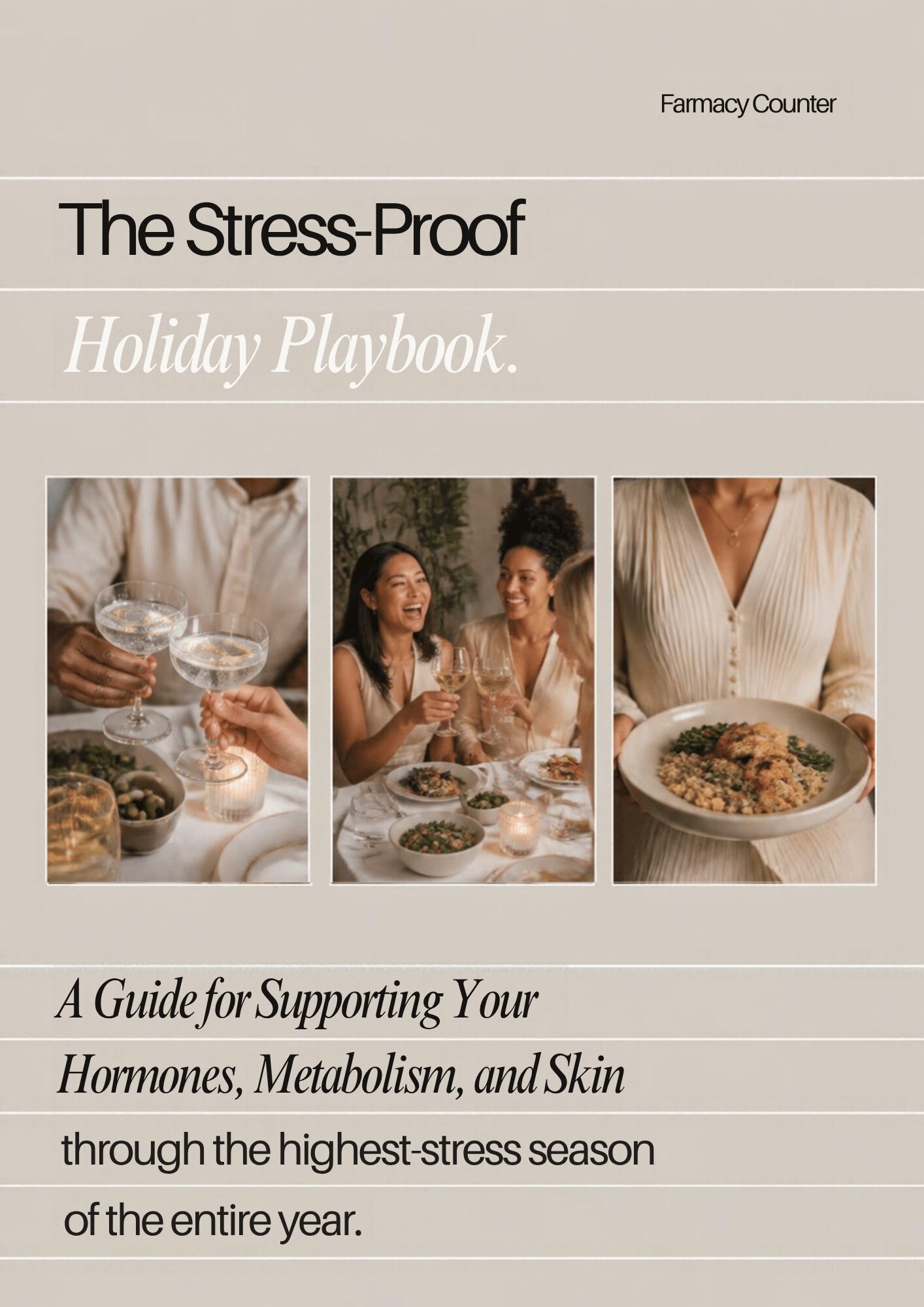
If you’d like all of this in one place, my free Stress-Proof Holiday Playbook gives you a practical plan to help you stay steady through the season.
Here’s how I’d use the weeks you have. If you’re reading this closer to the holiday, just start where you are.
Set a steady wake time. Start a 10-minute daily walk.
Add protein to breakfast. Decide which events you’ll say yes and no to. Plan your travel.
Prep a few easy, protein-forward meals. Block off quiet time on your calendar.
Eat a protein-rich breakfast. Walk after meals. Limit alcohol and protect your sleep.
Don’t “reset” with a crash diet. Return to your anchors and check in with how you feel.
This is the part most holiday advice skips.
Great to have in your bag for holiday travel. Check with your provider first if you take medications, are pregnant, or have a health condition.
Products shown are available through my Fullscript dispensary. Farmacy Counter may earn a commission on purchases.
When someone tells me the holidays throw everything off, I look at the pattern:
Bedtime, wake time, and night waking.
Cravings, energy dips, and how you feel between meals. (See why sugar cravings aren’t a willpower problem.)
Perimenopause, thyroid, and, for men, low testosterone when the story fits.
Not just the holidays, but caregiving, work, and everything else you carry.
Timing, interactions, and what changes during the season.
I also use my four working patterns to organize what I find:
Wired at night, tired by day, poor sleep, high stress
Fatigue, low energy, slow recovery
Blood sugar swings, cravings, stubborn weight
Puffiness, bloating, alcohol hitting harder
These are clues that organize questions. They don’t diagnose a cause.
Some people find targeted support helpful during stressful seasons, such as magnesium or other nutrients. This is the magnesium I carry. Check with your provider first, especially if you take medications or have a health condition.
Products shown are available through my Fullscript dispensary. Farmacy Counter may earn a commission on purchases.
It’s normal to feel stretched during the holidays. But the holidays can also bring loneliness, grief, and heavy emotions. Please talk with your provider or a mental health professional if you notice a low mood that doesn’t lift, loss of interest in things you enjoy, or trouble sleeping or eating for more than a couple of weeks.
Also call your provider promptly for chest pain, a racing heart, or shortness of breath.
And you don’t have to do it perfectly. A few steady anchors, set up before the chaos, can change how you feel on the other side.
If you haven’t yet, start with the free Stress-Proof Holiday Playbook above. And if you’d rather talk through what you need to feel your best this season, I offer a free discovery call. No pressure, just a conversation about whether functional medicine is the right next step for you.
Book Your Free Discovery Call →To your health and vitality, Dr. Ryan
In a classic study, the average holiday gain was small, under a pound, but it wasn’t lost afterward and made up much of the weight gained over the whole year. The bigger impact is often on sleep, energy, and stress.
Focus on four anchors: a consistent wake time, protein at breakfast and at big meals, a short walk after eating, and boundaries that protect your time and rest.
Yes. Light activity after a meal, even 10 to 15 minutes of walking, can lower the rise in blood sugar and insulin.
Usually not. Skipping breakfast to save up often backfires. A protein-rich breakfast helps keep energy and appetite steadier through the day.
Refill early, pack medications in your carry-on in the original bottles with a few extra days’ worth, keep your usual timing, and ask your pharmacist about alcohol interactions and cold medicines.
For educational purposes only. Not a diagnosis, and not a substitute for care from your healthcare provider or a licensed mental health professional. Talk with your provider before starting, stopping, or changing any medication or supplement.