Feeling more anxious this holiday season? Here’s how progesterone and estrogen shifts in perimenopause affect your nervous system, what else to check, and what helps.
Everyone assumes it’s the holidays.
The family dynamics. The hosting. The pressure of being “on” for days at a time. And those things are real. But some women notice something else: the anxiety feels different than it used to. It shows up faster. It’s harder to talk yourself out of. Situations you used to handle with mild tension now feel like they take everything you have.
If that’s you, I want you to hear this first: you’re not weak, and you’re not imagining it. For many women in their 40s, the nervous system is working with a changing hormonal environment, and the holidays press right on that spot.
You’re not weak, and you’re not imagining it.
This post covers how progesterone and estrogen affect your brain’s calming systems, what the research does and doesn’t show, what else can cause anxiety that looks like a hormone problem, and what I’d actually do about it. It’s educational and not a substitute for care from your own healthcare team. Please don’t start, stop, or change any medication on your own.

Perimenopause is the transition before menopause. It often starts in the 40s and can last several years. Ovulation becomes less regular, and estrogen and progesterone can swing widely, sometimes higher than before and sometimes lower.[1]
That’s why symptoms can feel unpredictable. Some weeks you feel fine. Other weeks the same stress feels like too much. (It’s also why mood changes in perimenopause so often get missed.)
Your Built-In CalmerHere’s the science behind the idea that your body has a built-in calmer.
Your body converts progesterone into a compound called allopregnanolone. Allopregnanolone acts on GABA-A receptors in the brain, the main calming pathway. It’s the same receptor family that benzodiazepines act on, though at a different site.[2] When this system is working well, it quietly helps you absorb stress without it taking over.
Progesterone’s calming effect is real, and its fluctuation in perimenopause may make some women more vulnerable to anxiety. But it’s rarely the whole story.
The holidays don’t create a hormone shift. They can make an existing one easier to feel. More noise, more people, more demands, and less sleep, all landing on a nervous system that has less room to spare.
Sleep is a big part of this. Perimenopause is linked to sleep problems, including night sweats and waking in the night.[5] And poor sleep makes the brain more reactive to worry. In one study, sleep deprivation amplified the brain’s anxious anticipation, especially in people already prone to anxiety.[6] The holidays often mean late nights, travel, and extra alcohol, which can make that worse.
Rule These OutBefore blaming hormones, I always rule out the things that cause the same feelings:
An overactive thyroid can cause anxiety, a racing heart, tremor, and trouble sleeping.[7] It’s easy to check with a blood test, and it’s worth ruling out.
It can cause or worsen anxiety, especially in sensitive people or at higher doses.[8] Many women get more sensitive in midlife without realizing it.
It may feel calming at first, but it fragments sleep later in the night, which can leave you more anxious the next day.[9]
Both can cause fatigue, a racing heart, and mood changes.[10][11]
Skipping meals, then eating a big holiday dinner, can cause shakiness and jitters that feel like anxiety. Here’s how to tell if your anxiety is a blood sugar event.
Decongestants (like pseudoephedrine), stimulants, thyroid medicine at too high a dose, steroids, and some pre-workout or “energy” supplements can all cause anxiety. As a pharmacist, I always check. Please don’t stop any medicine on your own.
They can be triggered or worsened by hormone changes, and they deserve their own care.
I cover the gut side of this in my post on anxiety, brain fog, and bloating, and the nutrient side in my post on how your neurotransmitters are built.
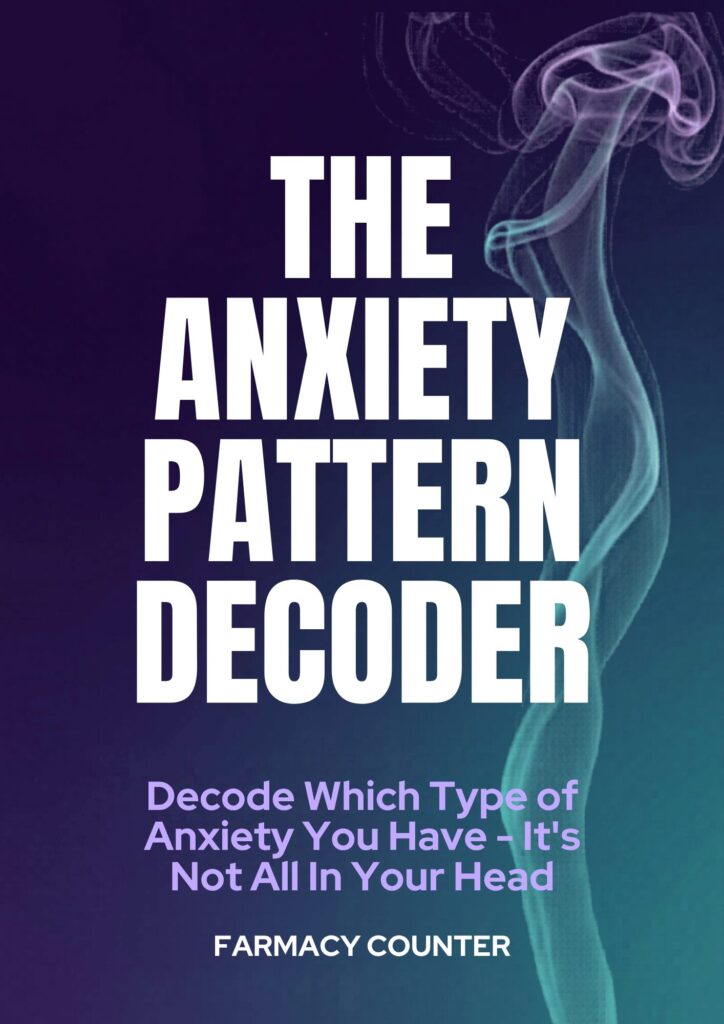
Anxiety isn’t one thing, and it doesn’t have one cause. My free Anxiety Pattern Decoder walks you through the four biological types of anxiety and includes a short assessment to help you see which one may be driving your pattern, so you know where to start. It doesn’t diagnose anything. It gives you a clearer starting point.
Free instant download. No spam, unsubscribe anytime.
If you also have cycle changes, hot flashes, or night sweats, my free Hormone Type Assessment can help you see where your hormones may fit in.
They’re simple, and they have the best evidence:
A steady bedtime, a cool room, and less alcohol in the evening. If night sweats are waking you, tell your provider, because treating them can help sleep and mood.[12] See my evening wind-down routine.
Try moving it earlier in the day, or cutting back for a week or two to see how you feel.
In a meta-analysis, exercise reduced anxiety symptoms in people with anxiety and stress-related conditions.[13] A daily walk counts.
Slow, controlled breathing has been linked to calmer heart rate patterns and lower stress and anxiety.[14] A few minutes of slow exhales is an easy place to start, and it fits right into a 10-minute daily reset.
Don’t skip meals to “save up” for the big dinner.
A walk alone, a quiet morning, or an early night is a real tool, not a luxury. See my posts on how to stress-proof your holidays and regulating your nervous system.
Some people try magnesium for anxiety. A systematic review found the evidence is limited and low quality, so I wouldn’t count on it.[15] It can also interact with some medicines and cause loose stools. Check with your provider first.
Available through my Fullscript dispensary. Farmacy Counter may earn a commission on purchases.
For some women in perimenopause and menopause, hormone therapy is an option, mainly for hot flashes and night sweats, and treating those can help sleep and mood. But it isn’t a treatment for anxiety on its own, and it isn’t right for everyone.[16] For anxiety itself, other options with good evidence include cognitive behavioral therapy and certain non-hormonal medicines, which your provider can discuss with you.[17]
Hormone therapy is a personal decision made with your prescriber, based on your age, history, and risks. I cover that in my post on the benefits and risks.
The Functional Medicine LensWhen a woman tells me her anxiety has changed, I look at the whole picture:
I also use four working patterns from my hormone traffic report to organize what I find:
Wired at night, tired by day, poor sleep, high stress
Blood sugar swings, jitters between meals, cravings
Fatigue, low iron, B12, or other nutrients
Bloating, puffiness, alcohol hitting harder
These are clues that organize questions. They don’t diagnose a cause.
Please reach out to your provider, a mental health professional, or emergency services if your anxiety feels overwhelming, if you’re having panic attacks, if it’s getting in the way of work, relationships, or sleep, or if you’re having thoughts of harming yourself.
Also call promptly for chest pain, shortness of breath, fainting, or a racing heart that doesn’t settle. You don’t have to wait until the holidays are over, and you don’t have to push through alone.
If your anxiety feels different this year, your body isn’t failing you. It may be responding to a changing hormonal environment, along with sleep, stress, and everything else on your plate. The good news is that there are real, practical steps, and you don’t have to figure it out alone.
If you haven’t yet, start with the free Anxiety Pattern Decoder above. And if you’d rather talk through what you’ve been experiencing, I offer a free discovery call. No pressure, just a conversation about whether functional medicine is the right next step for you.
Book Your Free Discovery Call →To your health and vitality, Dr. Ryan
It can for some women. Your body converts progesterone into allopregnanolone, which acts on the brain’s calming GABA-A system, and some women are sensitive to the swings in these hormones during perimenopause. Sleep, stress, and a history of anxiety also play a large role, so hormones are rarely the whole story.
The holidays don’t create a hormone shift, but they can make an existing one easier to feel. More noise, more people, more demands, less sleep, and extra alcohol all land on a nervous system that has less room to spare.
An overactive thyroid, caffeine, alcohol, low iron or B12, blood sugar swings, and some medications and supplements can all cause similar feelings. Anxiety and depression can also be triggered or worsened by hormone changes and deserve their own care.
Usually not on its own. Perimenopause is generally recognized by your age and symptoms, because hormone levels swing too much from day to day, and a single progesterone level depends on where you are in your cycle.
Hormone therapy is mainly used for hot flashes and night sweats, and treating those can help sleep and mood. It isn’t a treatment for anxiety on its own. For anxiety itself, cognitive behavioral therapy and certain non-hormonal medicines have good evidence, and your provider can discuss them with you.
For educational purposes only. Not a diagnosis, and not a substitute for care from your healthcare provider or a licensed mental health professional. Do not start, stop, or change any medication, supplement, or hormone therapy without talking with your provider.