One glass feels like three? Here’s what changes with age, sleep, hormones, and medications, why alcohol hits harder, and how to enjoy the holidays without the next-day crash.
Thanksgiving dinner. Holiday parties. A glass of wine with family you haven’t seen in months.
It used to be easy. Now one or two drinks and you’re flushed, bloated, sleeping terribly, and dragging through the next morning. You haven’t changed how much you drink. You’ve started to wonder if you just can’t keep up anymore.
I want you to hear this first: it’s not a lack of willpower, and it’s not all in your head. Your body has genuinely changed how it responds to alcohol. The reasons are a mix of body composition, sleep, medications, and yes, sometimes hormones. And a lot of it is something you can work with.
Your body hasn’t turned against you. It’s giving you information.
This post covers what the research shows about why alcohol hits harder in midlife, the role hormones do and don’t play, the pharmacist details most articles skip, and how to get through the season feeling better. It’s educational and not a substitute for care from your own healthcare team.

Alcohol spreads through the water in your body. As we age, body water and lean mass tend to go down, which means the same drink produces a higher blood alcohol level than it used to.[1] That’s true for both women and men.
In a classic study, women had higher blood alcohol levels than men after the same dose per kilogram. Part of the reason is lower activity of the stomach enzyme that begins breaking down alcohol, so more of it reaches the bloodstream.[2] This gap doesn’t go away in midlife, and it stacks with the age-related changes above.
Alcohol can help you fall asleep, but it fragments your sleep later in the night and suppresses REM sleep.[3] In perimenopause, night sweats and 3 a.m. wake-ups already make sleep less reliable.[4] Add a drink or two, and a hard night becomes a harder one. For men, sleep also gets lighter with age.
Less sleep, a higher blood alcohol level, and dehydration all add up to a slower recovery. That’s why the “next day” is where you notice it most.
This is the question I get most, and the honest answer is: probably less than you’ve been told.
Studies on whether alcohol is processed differently across the menstrual cycle have found small and inconsistent differences.[5] I’m not aware of solid evidence that falling estrogen changes how your liver breaks down alcohol.
It’s the other way around in men: heavy drinking can lower testosterone and affect the male reproductive system.[6] That can add to low energy, poor sleep, and low drive.
In a small study of postmenopausal women taking oral estrogen, drinking raised their estradiol levels for a few hours.[7] So alcohol can nudge your hormones, too.
Hormone shifts that disturb your sleep, plus alcohol that fragments it, can make you feel much worse the next day. This is the most practical link between hormones and holiday drinks.
I’d describe hormones as part of the picture, mostly through sleep, mood, and symptoms like night sweats. Some women notice that a drink triggers hot flashes or night sweats. The research on that is mixed, but if it happens to you, it’s real information about your body.
This is where I see the biggest surprises. Alcohol interacts with many medicines, and some of those interactions get more likely as we age and take more of them.[8]
Some supplements, such as kava and valerian, can also add to drowsiness or affect the liver.
Facial flushing, a fast heartbeat, or a sudden new reaction to alcohol can sometimes come from a medication or from a genetic enzyme difference. If it’s new, ask your pharmacist or provider. Please don’t stop any medication on your own, and ask your pharmacist to check your list for interactions before the holidays.
If one glass suddenly feels like three, I also look at:
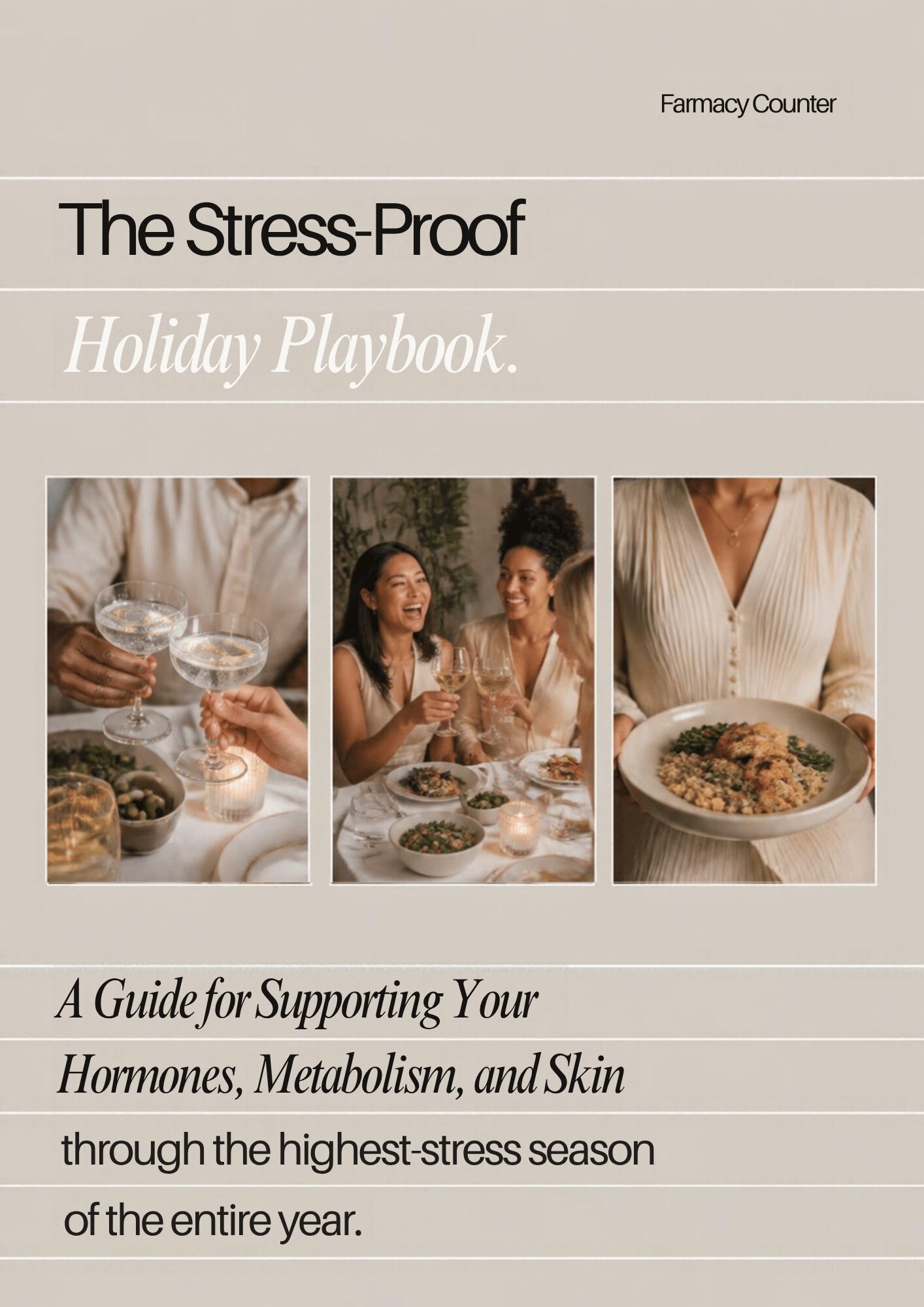
My free Stress-Proof Holiday Playbook is a practical guide to supporting your hormones, metabolism, and skin through the busiest season of the year, so you can enjoy it without feeling wrecked.
You don’t have to be perfect or skip every toast. These make a real difference:
Food in your stomach slows how quickly alcohol is absorbed and lowers the peak blood alcohol level.[10]
One drink, one glass of water. It helps with hydration and slows the pace.
Decide on one or two that are worth it, and skip the ones you don’t love.
Finishing a few hours before bed gives your body time to clear some of the alcohol before you sleep.
A steady bedtime, a cool room, and a wind-down routine help most. See my evening wind-down routine.
Water, a protein-rich breakfast, and a walk help you feel more like yourself. See my post on how to enjoy holiday meals without regret.
A sparkling water with bitters, citrus, or herbs feels festive without the cost.
If you take anything on the list above, ask your pharmacist what’s safe.
Some supplements interact with alcohol and medications, so check with your provider first. Magnesium is one people often ask about for sleep, and it’s worth testing your levels before you add it.
Available through my Fullscript dispensary. Farmacy Counter may earn a commission on purchases.
Alcohol isn’t harmless at any level, and its effects are dose-related. For women, even moderate drinking is linked to a higher chance of breast cancer.[11] That doesn’t mean you can’t ever have a glass of wine. It means it’s worth making an informed choice, especially if breast cancer runs in your family. I cover that in my post on breast health beyond the mammogram.
When someone tells me alcohol suddenly hits harder, I look at the whole picture:
I also use four working patterns from my hormone traffic report to organize what I find:
Alcohol hitting harder, bloating, puffiness, sluggish digestion
Wired at night, tired by day, poor sleep, high stress
Fatigue, low iron, B12, or other nutrients
Blood sugar swings, cravings, stubborn midsection weight
These are clues that organize questions. They don’t diagnose a cause.
Please talk with your provider if you’re drinking more than you’d like, if cutting back feels hard, or if you’re using alcohol to cope with stress, sleep, or mood. If you drink every day and want to stop, don’t stop suddenly without talking to a healthcare provider, because withdrawal can be dangerous.
Call for medical help right away if you have confusion, seizures, severe vomiting, trouble breathing, or you can’t wake someone after drinking.
And if your mood is heavy and doesn’t lift, or you’re having thoughts of harming yourself, please reach out to your provider, a mental health professional, or emergency services.
If alcohol hits differently than it used to, that’s your body giving you information. It’s about body composition, sleep, medications, and sometimes hormones, and it’s something you can work with. A few small changes can make the season feel better.
If you haven’t yet, start with the free Stress-Proof Holiday Playbook above. And if you’d rather talk through what you’ve been noticing, I offer a free discovery call. No pressure, just a conversation about whether functional medicine is the right next step for you.
Book Your Free Discovery Call →To your health and vitality, Dr. Ryan
As we age, body water and lean muscle tend to go down, so the same drink produces a higher blood alcohol level. Sleep also becomes more fragile, medications become more common, and recovery takes longer, so the next day is where you notice it most.
Probably less than you’ve been told. Studies on alcohol processing across the menstrual cycle show small, inconsistent differences, and there isn’t solid evidence that falling estrogen changes how the liver breaks down alcohol. Hormones matter most through sleep, mood, and night sweats.
Women reach higher blood alcohol levels than men after the same dose per kilogram, partly because of lower activity of the stomach enzyme that begins breaking down alcohol. That gap continues in midlife and adds to the age-related changes.
Sleep aids with diphenhydramine, drowsy allergy medicines, benzodiazepines, some antidepressants, muscle relaxants, and pain medicines, bedtime progesterone, blood pressure medicines, and acetaminophen with regular heavy drinking. Ask your pharmacist to check your list, and don’t stop any medication on your own.
Eat first, alternate each drink with water, choose one or two drinks that are worth it, stop a few hours before bed, protect your sleep, and plan a morning with water, a protein-rich breakfast, and a walk.
For educational purposes only. Not a diagnosis, and not a substitute for care from your healthcare provider, pharmacist, or a licensed mental health professional. Do not start, stop, or change any medication or supplement without talking with your provider.