
Low energy, motivation, or drive? Testosterone is only one piece. Here are the causes, from sleep apnea and alcohol to medications, and what to check first.
You don’t want an overhaul. You just want your edge back.
Sharper focus. Steady energy. Better sleep. Drive that doesn’t fade by 2 p.m. And somewhere along the way you started telling yourself that “this is just what getting older feels like.”
Maybe it is. But more often than most men are told, that “off” feeling comes from a few things that slipped.
And a lot of them can be found and fixed.
This post covers why men lose energy and drive, the foundations I look at first, what proper testing looks like, and the medication pearls a pharmacist notices. It’s educational and isn’t a substitute for care from your own healthcare team. Please don’t start, stop, or change any medication on your own. Numbers in brackets point to the references at the end.

Testosterone gets most of the attention, and it matters. But it’s rarely the only explanation.
had symptomatic late-onset low T
In a large European study, symptomatic late-onset low testosterone was found in only about 2% of men aged 40 to 79, and it required a combination of sexual symptoms and consistently low testosterone levels.[1]
That doesn’t mean low testosterone isn’t real. It means that when a man feels flat, tired, or unmotivated, there’s usually more than one thing going on, and testosterone is often an effect, not the cause.
I cover low testosterone in detail in lost drive and low testosterone in men. This post is the bigger picture. (See also why men’s energy isn’t just about testosterone.)
These come before any hormone prescription.
The biggest lever, and the one most men underestimate.
daytime testosterone in healthy young men[2]
tired no matter how long you’re in bed
Poor sleep also drains focus, mood, and motivation on its own. Sleep apnea, where breathing repeatedly stops during sleep, is common in men, especially with extra weight, loud snoring, or morning headaches, and it’s linked to lower testosterone.[3] A simple screening questionnaire can tell you if a sleep study is worth doing.
And alcohol, even a few drinks, fragments sleep and suppresses REM sleep.[4] More in why you can’t sleep.
Your waist says more than your weight.
Extra weight, especially around the middle, is closely linked to lower testosterone, and fat tissue converts some testosterone into estrogen. In studies, weight loss raised testosterone in men with obesity,[5] and low testosterone is common in men with type 2 diabetes.[6]
That makes your waist, fasting glucose, fasting insulin, and A1c worth checking. Insulin can start rising years before glucose does, so a “normal” glucose doesn’t rule out insulin resistance.
Not a “testosterone booster.” Something better.
Lifting is one of the best things you can do for your metabolism, muscle, bone, mood, and insulin sensitivity.[7] Its effect on testosterone itself is modest, so I don’t recommend it as a booster. I recommend it because it improves almost everything else. (See why grip strength predicts longevity.)
If you do one thing, track your drinks for two weeks.
Heavy drinking is associated with lower testosterone,[8] and even moderate drinking worsens sleep and recovery. Most men are surprised by their two-week total. (See how alcohol quietly undermines recovery.)
Running on adrenaline works until it doesn’t.
Chronic stress keeps your stress hormones up and wears on sleep, blood sugar, and mood.[9] “Pushing through” is often what keeps it going. (See the stress–testosterone tug-of-war.)
Depression looks different in many men.
Instead of sadness, it often shows up as:[10]
If this sounds familiar, it’s worth taking seriously, and a conversation with your provider or a mental health professional can help. Low drive is not a character flaw.
Your body clock runs on morning light.
Morning light is the strongest signal that anchors your body clock, which affects your sleep, energy, and mood.[11] Get outside early, and dim the lights and screens in the evening. (See how light runs your hormone clock.)
The overlap most men never hear about.
An underactive thyroid causes fatigue, low mood, brain fog, and low drive, and it overlaps with low testosterone.[12] Low iron, B12, and vitamin D are also worth checking. I cover the connection in why normal thyroid labs don’t rule out a testosterone problem.
Several common medicines can affect drive, mood, or sexual function:
For hair loss or an enlarged prostate. Linked to sexual side effects, including low desire, which persisted after stopping in some men.[13]
Especially SSRIs and SNRIs, which commonly cause low desire and delayed orgasm.[14] Never stop one suddenly. There are options your prescriber can adjust.
Can lower testosterone and drive.[15]
Can contribute for some men.
Taking testosterone, including in some products, can shut down your own production and reduce sperm count. Talk with your provider first, especially if you want children.
If your drive changed around the time you started or changed a medication, tell your provider or pharmacist. There are often alternatives.
Erectile problems can be an early warning sign of cardiovascular disease, sometimes years before a heart event.[16] It deserves a conversation with your provider, not just a prescription. If you have erectile changes along with chest pain, shortness of breath, or exercise intolerance, get checked promptly.
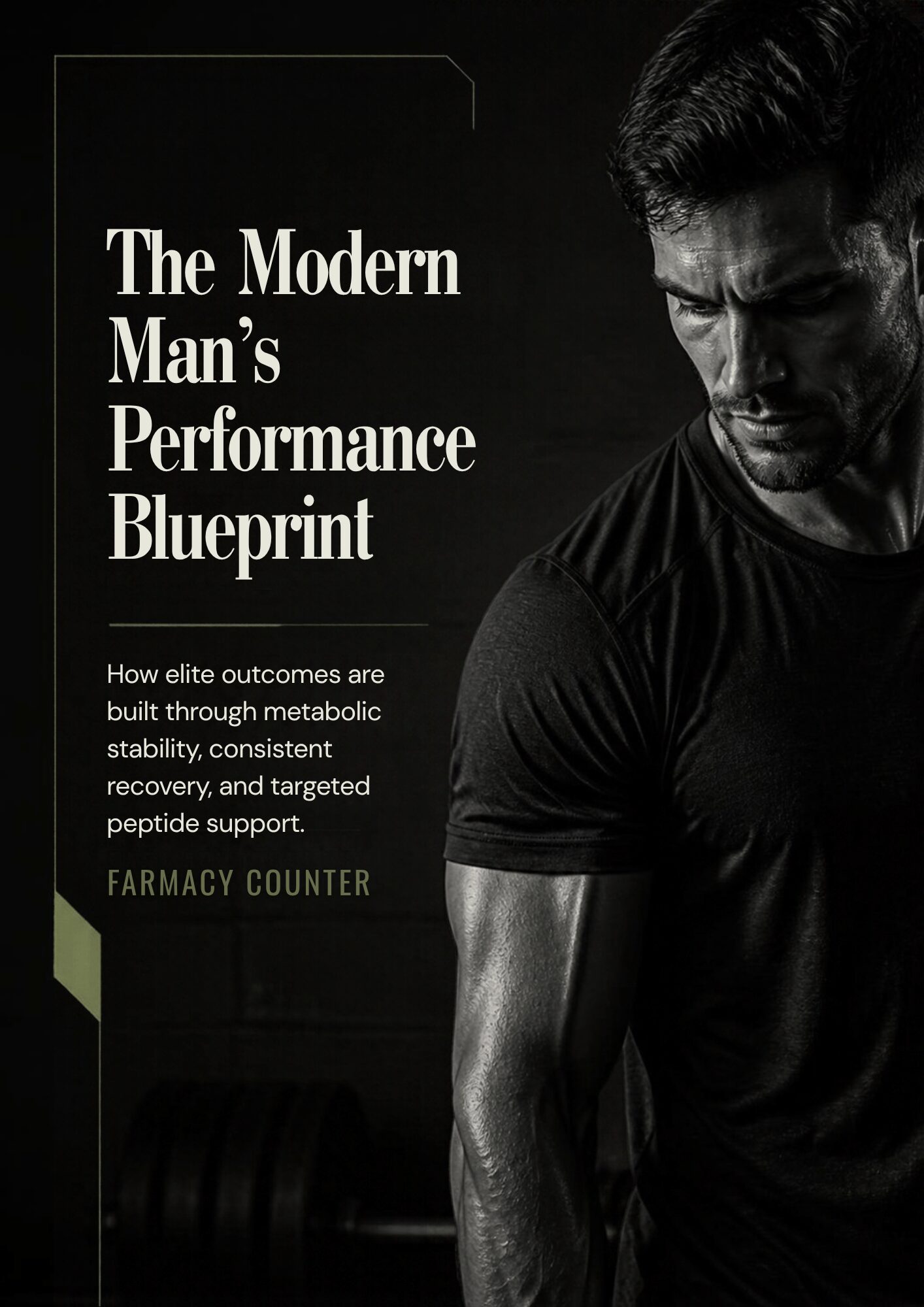
If you’re not sure where to begin, start with the foundations. My free Modern Man’s Performance Blueprint is a practical guide to the foundations behind your energy, drive, and performance, so you know what to change first.
If your symptoms persist after the basics, or you have low sexual desire, erectile changes, or other symptoms that fit, proper testing makes a difference.
Ideally between 7 and 10 a.m., and fasting. Testosterone is highest in the morning and varies through the day.
Guidelines recommend diagnosing low testosterone only with symptoms and consistently low levels on at least two separate morning tests.[17]
Total testosterone, SHBG, free testosterone, and, if it’s low, LH and FSH, which show whether the problem starts in the testes or the brain. Prolactin, thyroid, a CBC, iron studies, and A1c add context.
“Within range” isn’t always the end of the story, and a low result with no symptoms isn’t a reason to treat. Your symptoms and your labs belong together.
For men with confirmed low testosterone and symptoms, testosterone therapy can be an option. In a large trial of older men with low testosterone, treatment improved sexual function and mildly improved mood, but results for energy and vitality were less clear.[18]
A large safety trial found it did not increase heart attacks or strokes over about 22 months, though it was associated with other risks, such as atrial fibrillation and blood clots, and it requires monitoring.[19]
Therapy also suppresses your own production and sperm count. So it’s not a first step, and it’s a decision to make with a knowledgeable provider after the foundations have been looked at. I cover the full picture in why low testosterone gets missed in men and women.
When a man says he’s lost his edge, I look at the whole picture:
When it started, what changed, and what else is going on.
Schedule, snoring, and a sleep apnea screen.
Morning testosterone with SHBG, thyroid, ferritin and a CBC, B12, vitamin D, fasting glucose and insulin, A1c, lipids, and liver enzymes.
As a pharmacist, this is where I start.
Alcohol, caffeine, training, protein, and morning light.
Work, family, and whether you ever really switch off.
I also use my four working patterns to organize what I find:
Fatigue, low drive, slow recovery, low iron or vitamin D
Wired at night, tired by day, poor sleep, high stress
Blood sugar swings, cravings, belly weight
Puffiness, bloating, alcohol hitting harder
These are clues that organize questions. They don’t diagnose a cause.
You don’t need a perfect plan. Start with these:
These are the vitamin D and magnesium products I carry. Check with your provider first, especially if you take medications or have a health condition.
Products shown are available through my Fullscript dispensary. Farmacy Counter may earn a commission on purchases.
Please talk with your healthcare provider if you have persistent low drive, erectile changes, loud snoring or gasping at night, or a mood that isn’t lifting. Call right away for chest pain, shortness of breath, or fainting.
And if you’re having thoughts of harming yourself, or things feel hopeless, please reach out to your provider, a mental health professional, or emergency services right away. Asking for help is a strength, not a weakness.
You need the foundations, and often a closer look at what’s been getting in the way.
If you haven’t yet, start with the free Modern Man’s Performance Blueprint above. And if you’d rather talk through what you’ve been experiencing, I offer a free discovery call. No pressure, just a conversation about whether functional medicine is the right next step for you.
Book Your Free Discovery Call →To your health and vitality, Dr. Ryan
Common causes include poor sleep and sleep apnea, extra weight and insulin resistance, alcohol, chronic stress, depression, low thyroid or nutrient gaps, and medications. Low testosterone is one possible piece, but it’s rarely the only explanation.
In a large European study of men aged 40 to 79, symptomatic late-onset low testosterone was found in about 2% of men, based on a combination of sexual symptoms and consistently low testosterone levels.
In the morning, ideally between 7 and 10 a.m. and fasting. Guidelines recommend confirming low testosterone with at least two separate morning tests along with symptoms.
Yes. Finasteride and dutasteride, antidepressants such as SSRIs and SNRIs, opioid pain medicines, and some blood pressure medicines can affect drive, mood, or sexual function. Don’t stop any medication without talking with your prescriber.
It can be. Erectile problems can be an early warning sign of cardiovascular disease, sometimes years before a heart event, so they deserve a conversation with your provider.
For educational purposes only. Not a diagnosis, and not a substitute for care from your healthcare provider or a licensed mental health professional. Do not start, stop, or change any medication, including testosterone, without talking with your prescriber.