
Clinical Insights · Gut Health
What a GI Map Tells You About Your Gut and Why It Matters
A GI Map stool test reveals bacterial imbalances, H. pylori, yeast overgrowth, enzyme output, and gut immune markers — replacing guesswork with a precise, personalized protocol.
By Dr. Ryan Wagner, Pharm.D · 9 Min Read · Evidence-Based

You've tried the probiotics. You've added more fiber. You've cut out the foods that seemed to bother you. And yet, the bloating keeps showing up. The energy dips hit at the same time every afternoon. Your digestion still feels unpredictable, even when you're eating well.
It's frustrating when you're making real effort and your body isn't responding the way you'd expect.
The missing piece might not be what you're doing. It might be what you don't know is happening inside your gut. And that's exactly what a GI Map is designed to reveal.
At a Glance
| GI Map Marker | What It Reveals | Why It Matters |
|---|---|---|
| Akkermansia muciniphila | Protective bacteria level | Gut lining integrity, metabolic health, inflammation |
| H. pylori + virulence factors | Bacterial infection & severity | Reflux, nutrient malabsorption, ulcer risk |
| Candida species | Yeast overgrowth | Brain fog, sugar cravings, recurring infections |
| Pancreatic elastase | Enzyme output | Nutrient absorption, post-meal bloating |
| Secretory IgA | Gut immune defense | Pathogen vulnerability, HPA axis stress connection |
| Zonulin | Intestinal permeability | Systemic inflammation, skin, joints, autoimmunity |
| Beta-glucuronidase | Estrogen recirculation risk | Hormonal symptoms, estrogen dominance, PMS |
What It Is
What a GI Map Actually Is
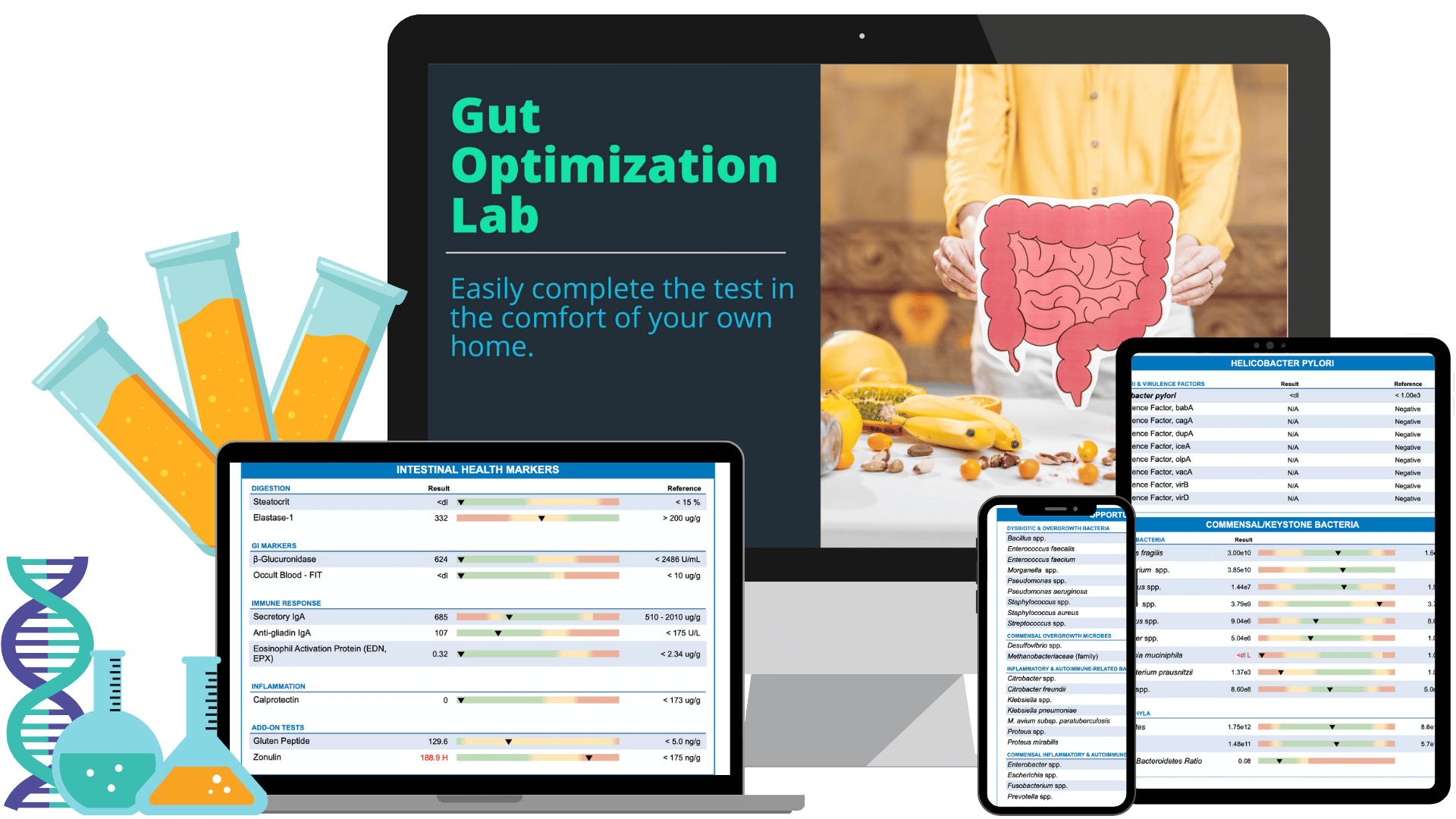
A GI Map is a comprehensive stool test, but it goes far beyond what a standard stool panel checks for. Instead of looking at one or two markers, a GI Map uses DNA-based technology to create a detailed picture of your entire gut environment.
It identifies the specific bacteria living in your digestive tract — both the beneficial strains you want more of and the opportunistic ones that may be contributing to symptoms. It screens for parasites, yeast overgrowth, and bacterial pathogens like H. pylori that can silently drive inflammation for years. And it evaluates how well your body is actually digesting and absorbing the food you eat by measuring specific markers that reflect enzyme output and gut immune function.
Think of it as a blueprint of your gut's inner ecosystem. Not a snapshot of one moment, but a map of the patterns that are influencing how you feel every day.
The Findings
What the Results Can Reveal
One of the most valuable aspects of a GI Map is that it often explains symptoms that have been dismissed or treated generically for months — sometimes years. Here are the most common findings.
Marker 01
Bacterial Imbalances
Your gut contains hundreds of bacterial species, and the balance between them matters. A GI Map can show if certain inflammatory bacteria are overgrown, or if key protective strains like Akkermansia muciniphila are depleted. Akkermansia plays a significant role in gut lining integrity and metabolic health, and low levels are associated with increased intestinal permeability, insulin resistance, and chronic inflammation.
Marker 02
H. pylori
This bacterial infection is more common than most people realize. It can contribute to acid reflux, nausea, upper abdominal discomfort, and nutrient malabsorption — and it often goes undetected on standard labs. A GI Map identifies it along with its virulence factors, which helps your provider determine how aggressively it needs to be treated.
Marker 03
Candida and Yeast Overgrowth
Sugar cravings, brain fog, recurring infections, and digestive symptoms that seem to cycle with your diet can all point to yeast overgrowth. A GI Map quantifies candida species so treatment can be targeted rather than guesswork.
Marker 04
Low Pancreatic Enzyme Output
If your body isn't producing enough digestive enzymes, even a nutrient-dense diet won't be fully absorbed. This can show up as bloating after meals, undigested food in stool, or persistent nutrient deficiencies despite supplementation. A GI Map measures pancreatic elastase to assess whether enzyme support could make a real difference.
Marker 05
Gut Immune Markers (Secretory IgA)
Secretory IgA is your gut's first line of immune defense. When it's elevated, it often signals that your immune system is actively responding to something — an infection, a food sensitivity, or chronic stress. When it's chronically low, it may reflect immune fatigue driven by HPA axis dysregulation, the same stress response system that affects cortisol, sleep, and energy. A depleted sIgA leaves your gut more vulnerable to pathogens and ongoing inflammation — which is why addressing the stress piece is never optional in a functional gut protocol.
Marker 06
Zonulin and Intestinal Permeability
Zonulin is a protein that regulates the tight junctions in your gut lining. When it's elevated on a GI Map, it's a direct signal that those junctions are loosening — what's commonly called "leaky gut", but with actual data behind it rather than guesswork. Increased intestinal permeability allows bacterial fragments, undigested food particles, and other antigens to cross into the bloodstream, triggering systemic inflammation that can show up as skin issues, joint pain, autoimmune reactivity, and fatigue that has nothing to do with how well you slept.
Pharmacist Note
Beta-glucuronidase is one of the findings that rarely comes up outside of a functional medicine context — and it matters more than most people realize. This enzyme, produced by certain gut bacteria, can deconjugate estrogens in the colon that were already packaged for elimination. The result: those estrogens get reabsorbed instead of excreted. Elevated beta-glucuronidase is one of the gut-driven reasons hormonal symptoms — PMS, cycle irregularities, estrogen dominance patterns — persist even when hormone-focused interventions have been tried. The community of gut bacteria responsible for estrogen metabolism is called the estrobolome, and a GI Map gives you a direct window into how well yours is functioning.

Free Resource
Not sure where to start with your gut? I put together a free 7-Day Gut Reset Blueprint — a day-by-day action plan covering what to eat, what to remove, how to support stomach acid and digestion, and the foundational steps to start healing. Grab it below.
Precision Over Guesswork
Why This Changes the Approach
Most gut protocols start with general recommendations. Take a probiotic. Eat more fiber. Eliminate gluten and dairy. And for some people, that's enough.
But if you've already tried those things and your symptoms persist, the issue likely isn't a lack of effort. It may be that the intervention doesn't match the problem.
A GI Map changes the conversation from "try this and see" to "here's what's actually going on, and here's the precise strategy to address it." When your provider can see that you have low Akkermansia, elevated H. pylori, elevated beta-glucuronidase, and reduced enzyme output, the treatment plan looks completely different than a generic gut health protocol. It might include a targeted antimicrobial for H. pylori, a specific prebiotic to support Akkermansia regrowth, digestive enzyme supplementation with meals, and dietary adjustments based on what your body can actually handle right now.
That level of precision is what separates symptom management from real resolution.
The Process
What to Expect from the Test
The process is straightforward. It's a take-home stool collection kit. You collect a sample at home, send it to the lab, and results typically come back within two to three weeks.
From there, your provider reviews the full report with you and builds a treatment plan based on your specific findings. Follow-up testing is sometimes recommended three to six months later to track how your gut environment is responding to treatment.
There's no prep, no fasting, and no invasive procedures. It's one of the most informative tests available, and one of the simplest to complete.
Is This Right for You?
When to Consider a GI Map
If any of this resonates, a GI Map could be a valuable next step:
- Bloating, gas, or irregular digestion that hasn't responded to dietary changes
- Persistent fatigue or afternoon energy crashes
- Skin issues like acne, eczema, or rosacea that seem connected to what you eat
- Recurring yeast infections or sugar cravings
- Autoimmune conditions or chronic inflammation
- Multiple rounds of antibiotics with digestion that never fully recovered
- Taking supplements without seeing results
- Hormonal symptoms — PMS, cycle irregularities, or estrogen dominance patterns — that haven't resolved with hormone-focused support alone
Your gut influences far more than digestion. It plays a direct role in energy, immune function, hormone balance, skin health, and even mood. Understanding what's happening at the microbial level gives your provider the information needed to build a plan that actually works for your body.
Your Next Step
Ready to Stop Guessing?
If you've been managing gut symptoms without answers, the Gut Optimization Lab is where we start. It includes the GI Map, with an optional upgrade to a full provider review and personalized protocol — so you can walk away with a roadmap, not just a test.
→ Learn More About the Gut Optimization LabFAQ
Common Questions
What is a GI Map and how is it different from a standard stool test?
A GI Map uses DNA-based technology to create a detailed picture of your entire gut environment, identifying specific bacteria, pathogens like H. pylori, yeast overgrowth, parasites, and markers of enzyme output and gut immune function. Standard stool panels typically check for a narrow set of pathogens and miss the microbiome imbalances and permeability markers that are often at the root of chronic gut symptoms.
What does beta-glucuronidase have to do with hormones?
Beta-glucuronidase is an enzyme produced by certain gut bacteria that can reactivate estrogens already packaged for elimination, allowing them to be reabsorbed into circulation. When elevated, it contributes to estrogen dominance patterns — PMS, cycle irregularities, and hormonal symptoms that don't fully respond to hormone-focused interventions. The gut bacteria responsible for estrogen metabolism are collectively called the estrobolome.
How long does it take to get GI Map results?
Results typically come back within two to three weeks of the lab receiving your sample. If you add the optional provider review upgrade, your provider then walks through the full report with you and builds a treatment plan based on your specific findings.
Do I need to fast or do any special preparation before the test?
No. The GI Map is a take-home stool collection kit. There is no fasting, no dietary prep, and no invasive procedures. You collect a sample at home and send it to the lab using the provided materials.
What happens after I get my results?
You'll receive your full GI Map report. With the optional provider review upgrade, your provider goes through the complete report with you and builds a personalized treatment plan based on what your specific results show. Depending on your findings, this might include targeted antimicrobials, specific prebiotics, digestive enzyme support, and dietary adjustments tailored to what your body can handle right now. Follow-up testing is sometimes recommended three to six months later to track how your gut is responding.
This content is for educational purposes only and does not constitute medical advice. Please work with a qualified healthcare provider for personalized guidance.