

When a man comes in with low energy, low libido, and diminished drive, testosterone is usually the first thing he’s already had tested, often more than once. If it comes back low-normal, that’s frequently where the workup stops. Thyroid, if it’s checked at all, usually gets reduced to a single number: TSH. If that comes back “in range,” it’s crossed off the list.
But TSH alone rarely tells the full story. And when thyroid hormone is even subtly suboptimal, it doesn’t just slow your metabolism. It undermines the exact systems that produce and regulate testosterone in the first place.
Thyroid Hormone Touches Almost Everything Testosterone Depends On
Testosterone production isn’t isolated. It depends on signaling from the brain, healthy Leydig cell function in the testes, and a metabolic environment that can actually support hormone synthesis. Thyroid hormone, specifically active T3, feeds into all three.
Suboptimal thyroid signaling shows up as:
- Reduced sensitivity in the signaling pathway between the brain and the testes
- Impaired cellular energy production, which limits how efficiently testosterone can even be synthesized
- Slower metabolic rate, which compounds fatigue that gets blamed on testosterone alone
This is why two men can have nearly identical testosterone numbers and feel completely different. The one with well-functioning thyroid signaling has the metabolic infrastructure to actually use that testosterone. The one without it is running the same hormone through a system that can’t fully capitalize on it.
TSH Is a Screening Tool, Not the Full Picture
TSH is useful, but it’s a pituitary signal, not a direct measure of how much active thyroid hormone your cells are actually getting. A normal TSH can exist alongside a genuinely low free T3, and free T3 is the form your tissues use.
A common pattern in fatigued men: TSH sits comfortably in range, free T3 is low-normal, and symptoms are persistent, cold intolerance, brain fog, stubborn weight gain, low drive, slower workout recovery. On paper, everything looks fine. In practice, cellular energy production is quietly running under capacity.

What Actually Slows Down Thyroid Hormone in Men
A few patterns show up repeatedly in clinical practice:
- Chronically elevated cortisol. Ongoing stress interferes directly with T4-to-T3 conversion and can shift conversion toward reverse T3, an inactive form that occupies receptor space without doing the work. Cortisol and thyroid function move together far more than most men realize.
- Gut health. A significant portion of T4-to-T3 conversion happens in the gut. Dysbiosis, inflammation, and poor gut barrier integrity, all more common in men under chronic stress, directly impair that conversion step.
- Nutrient depletion. Converting T4 into active T3 requires selenium, zinc, and iodine. Restrictive dieting, high-intensity training without adequate recovery, and poor overall nutrient intake are common ways men run short on these without realizing it.
- Insulin resistance. Elevated insulin interferes with T4-to-T3 conversion, adding another layer that rarely gets connected back to thyroid symptoms.
Each of these is also a well-documented driver of low testosterone. Which means, in a lot of men, thyroid dysfunction and low testosterone aren’t two separate problems. They’re two symptoms of the same underlying systemic pattern; stress, gut health, nutrient status, and metabolic function all pointing in the same direction.
Why This Gets Missed
Thyroid dysfunction in men is underinvestigated for a simple reason: it’s rarely on the differential when the presenting complaint is fatigue or low libido. Testosterone gets tested first because it’s the hormone most associated with those symptoms in men’s health conversations. Thyroid, when it’s checked at all, usually stops at TSH.
That leaves a real gap. A man with suboptimal free T3 can spend months, or years, chasing a testosterone number that was never the actual bottleneck.

The Takeaway
Testosterone matters, but it doesn’t operate in isolation. If your thyroid isn’t fully supporting cellular energy production, your body may not be able to use the testosterone it has, no matter what the number on the lab report says.
Fatigue, low drive, and stalled progress aren’t always a testosterone story. Sometimes they’re a thyroid story wearing a testosterone symptom.
Ready to See Where Your Hormones Stand?
If you’re wondering how your hormone rhythms are functioning, and whether stress, sleep loss, or lifestyle shifts might be throwing things off, here’s your next step.
👉 Take the “How Balanced Are Your Hormones?” Quiz Here »
You’ll receive a free, personalized 13-page hormone report that breaks down eight key hormone systems through a functional medicine lens, including:
✅ A snapshot of your current hormone balance
✅ Insights into your energy, mood, sleep, metabolism, and reproductive health
✅ Functional medicine–based guidance to help you begin rebalancing naturally
Think of it as your roadmap back to alignment, helping you understand your body’s signals, support hormonal harmony, and feel clearer, steadier, and stronger from the inside out.
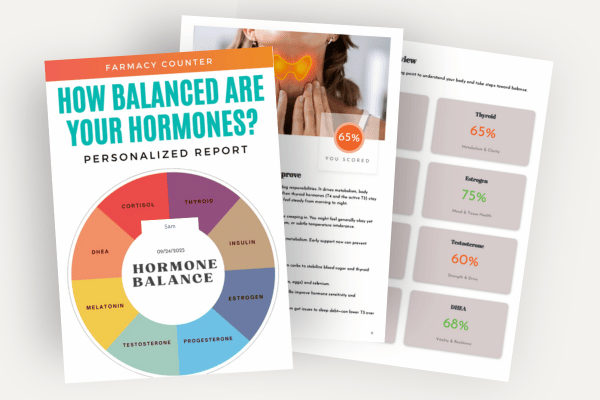
How Balanced are Your Hormones?
Take our 3-minute quiz to discover your unique hormone balance—and get a personalized 13-page report with insights and actionable steps to support energy, mood, sleep, metabolism, and reproductive health.