

If you’ve ever white-knuckled your way through a sugar craving only to give in anyway — and then spent the next hour wondering what is wrong with you — I want to tell you something important.
Nothing is wrong with you.
What you’ve been calling a willpower problem is actually a biology problem. And the distinction matters enormously, because biology problems have biological solutions. Here’s what’s actually happening every time that craving hits.
Your Brain Is Doing Exactly What It Was Designed to Do
Sugar triggers a dopamine release in the brain’s reward center — the same pathway that registers warmth, safety, and connection. This isn’t a design flaw. For most of human history, sweet foods meant ripe fruit, which meant nutrients and calories at a time when both were scarce. Your brain learned to want sugar because wanting it kept your ancestors alive.
The problem is that food manufacturers understand this system in extraordinary detail. They employ neuroscientists specifically to engineer products that activate the dopamine pathway as efficiently as possible. The “bliss point” — the precise ratio of sugar, fat, and salt that makes a food almost impossible to stop eating — is a real optimization target that the food industry spends billions of dollars refining every year.
Your ancient brain, beautifully designed for a world that no longer exists, is meeting modern food engineering designed to exploit it. The craving that feels like weakness is actually your nervous system responding exactly as it was built to respond. That’s not a character flaw. That’s biology.

The Blood Sugar Roller Coaster You Didn’t Choose to Get On
Every time you eat refined sugar or processed carbohydrates, your blood glucose rises sharply. Your pancreas responds by releasing insulin to bring it back down — and in many people, particularly those who have been cycling through sugar and restriction for years, it overcorrects. Blood sugar drops below baseline. Your brain, which runs almost entirely on glucose, registers something close to an emergency and sends a single urgent signal: more sugar, now.
What you experience as a craving is closer to withdrawal. And the longer the cycle has been running, the more entrenched it becomes — because your body has learned to anticipate the crash and begins signaling for sugar before the drop has even happened.
This is why you can eat a large lunch and still be ravenous for something sweet two hours later. It’s not greed. It’s a blood sugar system that has been dysregulated, often for years, sending distress signals your conscious mind interprets as cravings.
In functional medicine, we look at specific markers that reveal how severe the dysregulation is: fasting insulin, HbA1c, and a full glucose tolerance curve. Most people who struggle chronically with sugar cravings have insulin patterns that standard annual bloodwork completely misses — because the standard tests aren’t designed to find them.
Your Gut Microbiome Is Placing Your Food Orders
This is the one that tends to stop people cold — because most people have no idea it’s happening.
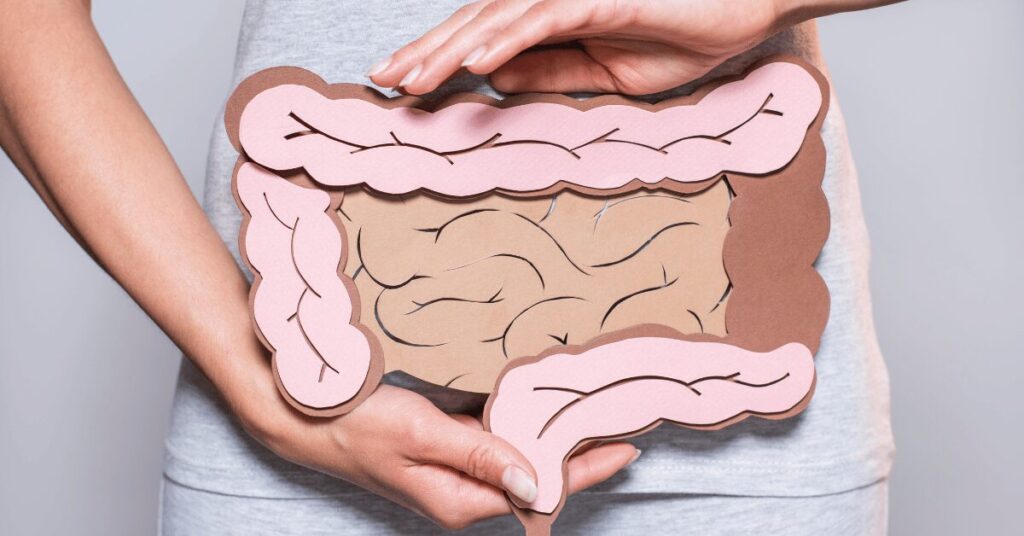
The bacteria living in your digestive tract are not passive passengers. Certain strains — particularly those that thrive on refined carbohydrates and sugar — produce neurotransmitters and chemical signaling molecules that travel via the vagus nerve directly to your brain, where they influence food-seeking behavior in real time.
A microbiome that has been fed refined sugar for years develops an overgrowth of precisely those bacteria. They are not subtle about their preferences. Research now suggests that the food cravings you experience may in part originate not in your conscious mind, but in the microbial community living in your gut — which is running its own agenda and using your nervous system to place its orders.
The craving you feel twenty minutes before you reach for something sweet? It may have started in your intestine, not your brain.
This is one of the reasons why eliminating sugar through willpower alone is so difficult. You’re not just fighting your own desires. You’re fighting a microbial colony that has a direct line to your neurological reward system.
Three Specific Nutrients Are Almost Certainly Running Low
In functional medicine, we look at the micronutrients responsible for glucose regulation in anyone who struggles chronically with sugar cravings. Three show up depleted consistently:
Chromium is a cofactor in insulin signaling. Without adequate chromium, your cells become less sensitive to insulin — which means blood sugar stays elevated longer, insulin stays elevated longer, and the eventual crash is more severe. Chromium depletion drives the exact blood sugar instability that creates persistent cravings. And here’s the insidious part: sugar consumption itself depletes chromium. The craving depletes the nutrient that would reduce the craving.
Magnesium is required for over 300 enzymatic reactions including glucose metabolism and insulin receptor function. When magnesium is low, blood sugar regulation deteriorates, sleep quality drops, cortisol rises — and cortisol is one of the most powerful drivers of sugar cravings that exists. Standard serum magnesium tests miss deficiency in most people. RBC magnesium measures what’s actually inside your cells, which is where it matters.
B vitamins — particularly B1, B3, and B6 — are essential cofactors in the metabolic pathways that convert glucose into cellular energy. When they’re depleted, your cells can’t process sugar efficiently even when blood glucose is adequate. The result is a persistent signal that reads as hunger or craving, even when you’ve eaten enough. Chronic stress, poor sleep, hormonal birth control, and yes — excess sugar — all deplete B vitamins significantly.
When I test these in clients who have struggled with sugar cravings for years, I find deficiencies in the majority of them. Repleting these nutrients — in the right forms and at therapeutic doses — often produces a noticeable reduction in craving intensity within two to four weeks.

What This Means for You
Every approach to sugar cravings that focuses only on behavior — on eating less of it, resisting it harder, finding healthier substitutes — is working downstream of the actual problem. The behavior is a symptom. The biology is the cause.
That doesn’t mean behavior doesn’t matter. It means behavior change that isn’t supported by biological correction tends not to hold. You can follow a plan perfectly for two weeks and then have one stressful day that unravels it — not because you lack commitment, but because the underlying systems that were creating the craving were never addressed.
The functional medicine approach addresses the blood sugar dysregulation, the gut microbiome, and the nutrient depletions simultaneously — and uses the mindset methodology developed by WildFit founder Eric Edmeades to change the psychological identity underneath the behavior so that the craving becomes genuinely unnecessary.
Not suppressed. Not white-knuckled past. Simply no longer needed.
Want the Full Picture?
If this is landing for you — if you’re reading this and recognizing your own experience in the biology described here — I put together a free guide that goes even deeper.
Breaking Up With Sugar: The Real Reason You Keep Going Back — And How to Finally Stop walks you through exactly what’s been driving your cravings at the root level, and what actually has to change for the cycle to stop.
And if you’re ready to do the reset — the Food Freedom Challenge is a 2-week live program with me where we address the biology and psychology together, in real time, with support.