The Reason You Gain Weight Over the Holidays Isn’t Just About Food
Holiday weight gain isn’t only about food. See how stress, sleep, and blood sugar work together, and what to do about it before January.
- By Dr. Ryan Wagner, Pharm.D
- 6 Min Read
- Evidence-Based
You track what you eat. You stay reasonable at the holiday table. You don’t go overboard. And somehow the scale still moves in the wrong direction by January.
If that sounds familiar, you are not imagining it, and it is not a discipline problem. Food matters, but it is not the only thing in the equation. Stress, sleep, and blood sugar all change during the holiday season, and they change how your body handles the food you eat.
This post covers what the research shows, what I look at from a functional medicine perspective, and what you can do about it. It is educational and is not a substitute for care from your own healthcare team. Numbers in brackets point to the references at the end.
What the Research Actually Shows
And most of it was still there months later[1]
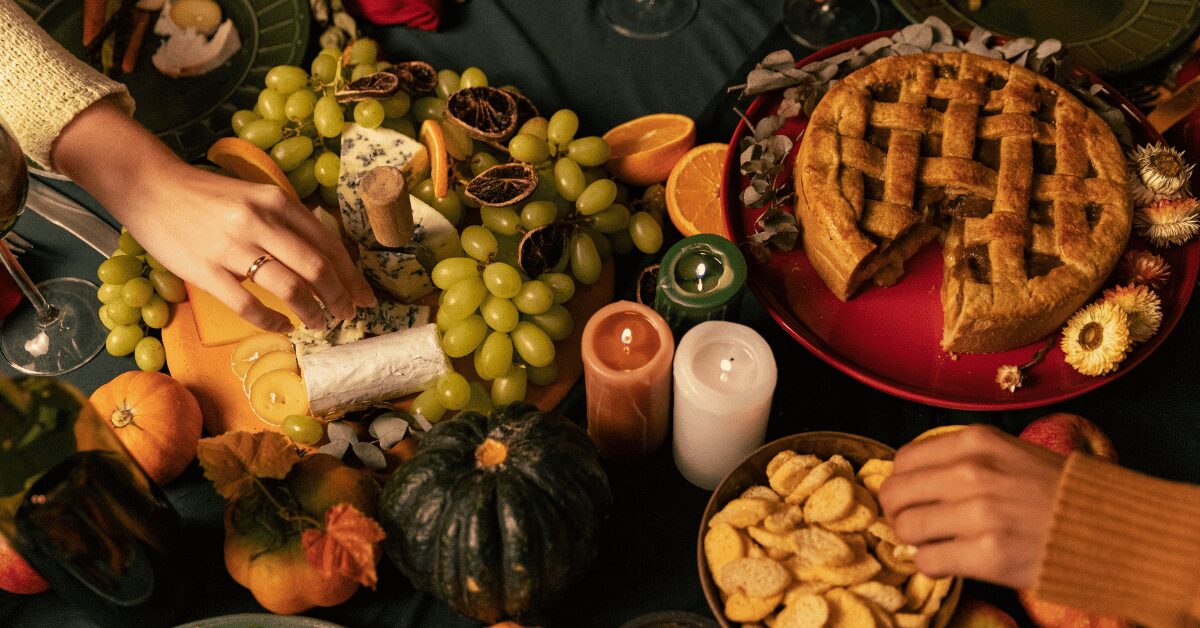
In a well-known study, adults gained about one pound on average over the holiday season, and most of it was still there months later. That is a small number, which is good news. It also means the real issue is the slow creep: a pound or two each year that never comes off.
So the goal is not to panic about one big dinner. It is to understand what changes during the season so you can protect your baseline.
Stress Changes How Your Body Handles Sugar
Cortisol is your body’s main stress hormone, and one of its jobs is to raise blood sugar so you have fuel to handle a challenge. It does this by telling your liver to release stored glucose, even when you have not eaten.[2]
That is helpful in a real emergency. But when stress stays high for weeks, your body can end up making more insulin to manage the extra glucose, and higher insulin can make it easier to store fat. This is one reason I look at fasting insulin and not just glucose. Fasting insulin can be elevated even when glucose looks normal.
Stress also changes appetite. In one laboratory study, women who produced more cortisol in response to stress ate more sweet food afterward.[3] That is biology at work, not a lack of willpower.
Sleep Changes Your Hunger Signals
The holidays chip away at sleep: late nights, travel, more alcohol, a disrupted routine. And sleep is one of the strongest levers on appetite.
Lower leptin, higher ghrelin, and more hunger, especially for sweet and starchy foods[4]
Poorer glucose tolerance and higher evening cortisol[5]
In a classic study, healthy young men who were limited to four hours of sleep for two nights had lower levels of leptin (the hormone that signals fullness), higher levels of ghrelin (the hormone that signals hunger), and reported feeling hungrier, especially for sweet and starchy foods. In another study from the same group, six nights of short sleep led to poorer glucose tolerance and higher evening cortisol.
These are small, short studies in healthy young men, so they show what is possible, not what will happen to everyone. But they match what many of my clients describe: when sleep falls apart, cravings get louder and meals feel less satisfying.
When It All Shifts at Once
Here is the part that makes the holidays different. Stress, sleep, and blood sugar do not change one at a time. They shift together and feed into each other.
That is why the same plate of food can feel different in December than it does in June.
It is not that your body is working against you. It is that the whole system is under more pressure.
What I Look At
In my practice I look at patterns, not a single number. When someone says the holidays derailed them, I consider:
Sleep and Rhythm
When do you wake up, when do you go to sleep, and how much light do you get in the morning?
Blood Sugar and Insulin
Fasting glucose, fasting insulin, and A1c, interpreted together. Cravings, afternoon crashes, and waking at 3 a.m. can all be clues.
Thyroid
Fatigue, feeling cold, and weight changes overlap with thyroid changes, so it belongs on the list.
Alcohol and Gut
Both affect sleep, blood sugar, and how you feel the next day.
The Four Patterns
I group hormone symptoms into four working patterns, and most people overlap. During the holidays I most often see Dysregulated Rhythm (wired at night, tired by day) and Traffic Misdirection (cravings and blood sugar swings), sometimes with Overloaded Clearance (alcohol hitting harder) layered on top.
These are clues that organize questions. They do not diagnose a cause.
The Habits I Come Back To
You do not need a strict plan. These are the habits I come back to:
- Do not arrive starving. Eat a protein-rich snack before the party. Showing up very hungry makes it easier to overeat before you have finished your first plate.
- Start your plate with protein and vegetables. In a small study of adults with type 2 diabetes, eating protein and vegetables before carbohydrates led to lower blood sugar after the meal than eating carbohydrates first.[6] It is the same food, just a different order.
- Walk after big meals. In a study of people with type 2 diabetes, walking after meals lowered post-meal blood sugar more than walking at other times.[7] Even ten minutes is a good start.
- Protect a few sleep non-negotiables. A steady wake time, a wind-down without screens, and finishing your last drink a few hours before bed.
- Choose movement you can recover from. A walk, an easy bike ride, or moderate strength work. If you love hard workouts and you are sleeping well, keep them.
- Check in weekly. Notice your sleep, cravings, energy, and skin. A pattern you catch early is easier to fix.
Let one meal be one meal. One holiday dinner does not undo your progress. The pattern across the season matters more.
If you take medication for diabetes, follow your provider’s guidance on meals and walking.
When to Talk to Your Provider
Seasonal ups and downs are normal. But if you notice rapid or unexplained weight changes, extreme thirst, constant fatigue, or symptoms that keep going after the holidays, please talk with your healthcare provider. Do not wait for January.
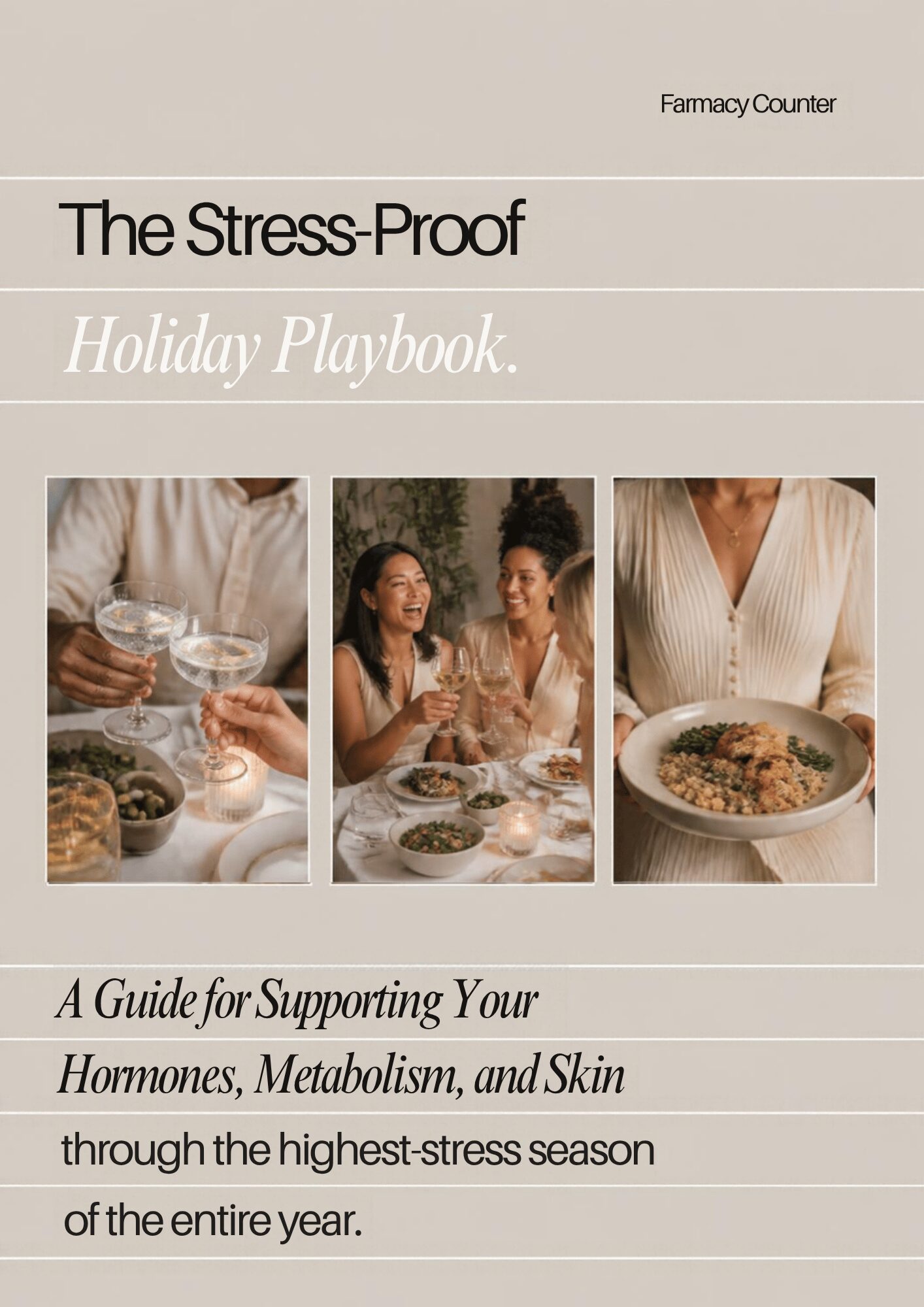
The Stress-Proof Holiday Playbook
I put together a free guide for this exact season. The Stress-Proof Holiday Playbook explains how stress shows up in your sleep, cravings, mood, and skin, with four simple protocols, a blood sugar decision tree for parties, and a weekly check-in to see what is working.
Free instant download. No spam, unsubscribe anytime.
Rather Talk It Through?
If you would rather talk through what is going on with your own blood sugar, hormones, and sleep, I also offer a free discovery call. No pressure, just a conversation about whether functional medicine is the right next step for you.
Book Your Free Discovery Call →To your health and vitality,Dr. Ryan
Frequently Asked Questions
Why do I gain weight over the holidays even when I eat reasonably?
Food matters, but it is not the only thing in the equation. Stress, sleep, and blood sugar all change during the holiday season, and they change how your body handles the food you eat. They shift together and feed into each other, which is why the same plate of food can feel different in December than it does in June.
How much weight do people actually gain over the holidays?
In a well-known study, adults gained about one pound on average over the holiday season, and most of it was still there months later. The real issue is the slow creep: a pound or two each year that never comes off.
How does stress affect blood sugar and weight?
Cortisol raises blood sugar by telling your liver to release stored glucose. When stress stays high for weeks, your body can end up making more insulin to manage the extra glucose, and higher insulin can make it easier to store fat. In one laboratory study, women who produced more cortisol in response to stress ate more sweet food afterward.
Can poor sleep make you hungrier?
In a classic study, healthy young men limited to four hours of sleep for two nights had lower leptin, higher ghrelin, and reported feeling hungrier, especially for sweet and starchy foods. These are small, short studies, so they show what is possible, not what will happen to everyone.
What can I do at holiday meals to keep blood sugar steadier?
Do not arrive starving, start your plate with protein and vegetables, and take a short walk after big meals. Even ten minutes is a good start. If you take medication for diabetes, follow your provider’s guidance on meals and walking.
For educational purposes only. Not a diagnosis, and not a substitute for care from your healthcare provider. Talk with your provider before starting or stopping any medication or supplement.
- Yanovski JA, Yanovski SZ, Sovik KN, Nguyen TT, O'Neil PM, Sebring NG. A prospective study of holiday weight gain. N Engl J Med. 2000;342(12):861-867.
- Kuo T, McQueen A, Chen TC, Wang JC. Regulation of glucose homeostasis by glucocorticoids. Adv Exp Med Biol. 2015;872:99-126.
- Epel E, Lapidus R, McEwen B, Brownell K. Stress may add bite to appetite in women: a laboratory study of stress-induced cortisol and eating behavior. Psychoneuroendocrinology. 2001;26(1):37-49.
- Spiegel K, Tasali E, Penev P, Van Cauter E. Brief communication: sleep curtailment in healthy young men is associated with decreased leptin levels, elevated ghrelin levels, and increased hunger and appetite. Ann Intern Med. 2004;141(11):846-850. https://pubmed.ncbi.nlm.nih.gov/15583226/
- Spiegel K, Leproult R, Van Cauter E. Impact of sleep debt on metabolic and endocrine function. Lancet. 1999;354(9188):1435-1439. https://pubmed.ncbi.nlm.nih.gov/10543671/
- Shukla AP, Iliescu RG, Thomas CE, Aronne LJ. Food order has a significant impact on postprandial glucose and insulin levels. Diabetes Care. 2015;38(7):e98-e99.
- Reynolds AN, Mann JI, Williams S, Venn BJ. Advice to walk after meals is more effective for lowering postprandial glycaemia in type 2 diabetes mellitus than advice that does not specify timing: a randomised crossover study. Diabetologia. 2016;59(12):2572-2578. https://pubmed.ncbi.nlm.nih.gov/27747394/