

If you dread spring every year, you already know the standard options. Antihistamines that make you drowsy. Nasal sprays you use indefinitely. Decongestants that work for a few hours and leave you wired. And the general sense that you’re managing a symptom every single year without ever addressing why your immune system overreacts to particles that most people barely notice.
Seasonal allergies are not a mystery. They’re an immune dysregulation problem — and like most immune dysregulation problems, they have identifiable biological drivers underneath them that most conventional approaches never look at.
Here’s what the functional medicine investigation into allergy reactivity actually looks like — and the interventions that go beyond the standard advice you’ve already heard.
What’s Actually Happening: The Mechanism
Seasonal allergies are a type I hypersensitivity reaction mediated by IgE antibodies. When a sensitized immune system encounters an allergen — pollen, mold spores, grass — IgE antibodies bound to mast cells and basophils trigger degranulation, releasing histamine, leukotrienes, prostaglandins, and other inflammatory mediators. This produces the familiar cascade: nasal congestion, sneezing, itching, watery eyes, and in some people, systemic fatigue and brain fog.
The question functional medicine asks is not how to block histamine after it’s already been released. It’s why the immune system is sensitized and overreactive in the first place — and why some people react severely while others with identical pollen exposure have no symptoms at all.
The answer almost always comes back to three things: the gut microbiome, the total inflammatory and histamine load the system is already carrying, and the regulatory capacity of the immune system. Address those, and the allergic reactivity often reduces — not because you’ve suppressed the immune response with a medication, but because you’ve addressed the conditions that were making it hyperreactive.

The Gut-Allergy Connection Most People Have Never Heard
The gut microbiome plays a direct regulatory role in immune tolerance. Approximately 70-80% of the immune system is located in the gut-associated lymphoid tissue (GALT), and the bacterial composition of the microbiome directly influences the ratio of regulatory T cells (Tregs) to effector T cells — a ratio that determines whether the immune system responds with tolerance or reactivity to environmental antigens.
Specific bacterial species — particularly Lactobacillus and Bifidobacterium strains, as well as butyrate-producing Clostridia — support Treg development and immune tolerance. Dysbiosis that reduces these populations tips the immune balance toward Th2 dominance, which is the inflammatory phenotype associated with allergic disease. Th2 dominance means more IgE production, more mast cell sensitization, and more histamine release in response to the same allergen exposure.
This is why the research consistently shows that antibiotic exposure in early childhood — which dramatically disrupts microbiome development — is associated with significantly higher rates of allergic disease. And it’s why gut restoration is one of the most underutilized interventions for allergy management in adults.
What this looks like clinically: Comprehensive stool analysis to assess microbiome diversity, identify dysbiotic overgrowth, and evaluate gut permeability markers. Targeted probiotic support — strain specific, not generic — alongside prebiotic fiber that feeds the Treg-supporting bacterial populations. And addressing intestinal permeability, because a leaky gut allows partially digested proteins and bacterial endotoxins into systemic circulation, adding to the immune activation load the system is already carrying into allergy season.

The Total Histamine Load Problem
Here’s something almost nobody discusses in the context of seasonal allergies: pollen is not the only source of histamine your body is managing.
Histamine is produced by dysbiotic gut bacteria, released from mast cells throughout the body in response to any immune trigger, and consumed directly from dietary sources — fermented foods, aged cheeses, wine, alcohol, smoked meats, leftovers, spinach, tomatoes, avocado. It’s cleared primarily by two enzymes: DAO (diamine oxidase) in the gut, and HNMT (histamine N-methyltransferase) in tissues including the brain.
The threshold at which histamine symptoms appear is not fixed. It depends on total histamine load relative to clearance capacity. This is why someone might tolerate wine without symptoms in October but react dramatically in April. The pollen season adds a massive histamine load on top of whatever baseline the system was already managing. The DAO and HNMT clearance systems get overwhelmed. And the threshold for symptoms drops.
What this looks like clinically: Measuring whole blood histamine and plasma DAO enzyme activity gives a picture of the load and clearance capacity going into allergy season. People with elevated whole blood histamine and low DAO are walking into spring with a depleted buffer. Temporarily reducing dietary histamine load during peak season, supporting DAO activity with cofactors (vitamin C, B6, copper), and addressing the gut dysbiosis driving excess histamine production can meaningfully raise the threshold before pollen season hits.
Mast Cell Stability: The Intervention Most Allergists Don’t Discuss
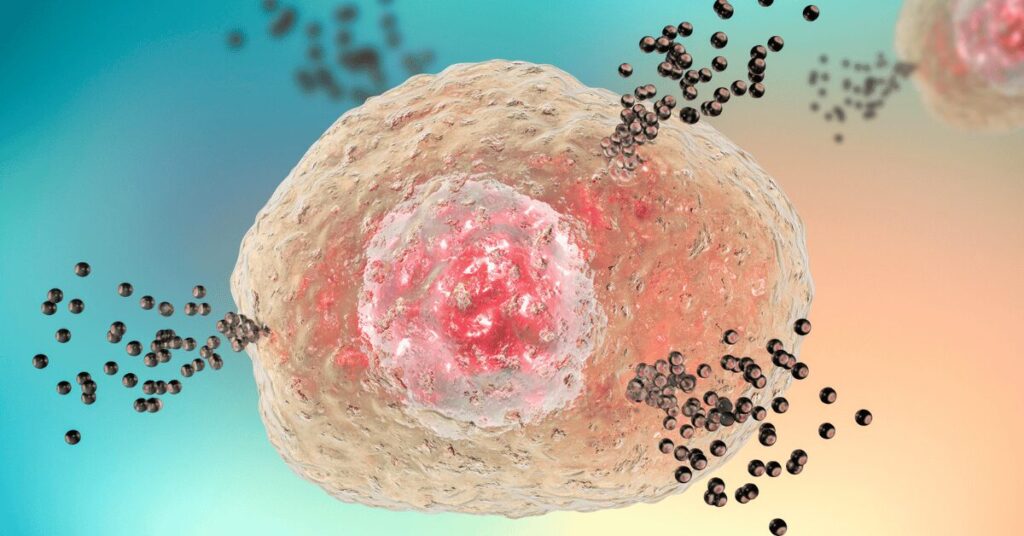
Mast cells are the primary effector cells of the allergic response — they’re the ones that release histamine when triggered by IgE-allergen complexes. But mast cells don’t release histamine only in response to IgE. They also degranulate in response to stress, heat, cold, physical pressure, alcohol, non-IgE immune triggers, and certain foods.
In people with mast cell hyperreactivity — which is distinct from classic mast cell activation disease but exists on a spectrum — the threshold for degranulation is chronically lower than it should be. These are the people whose allergy symptoms seem disproportionate to their actual pollen exposure, who react to multiple triggers simultaneously, and whose allergy season starts earlier and ends later than it should.
Mast cell stabilization is an approach that gets almost no attention in conventional allergy care. Several compounds have evidence for stabilizing mast cell membranes and reducing degranulation:
Quercetin is probably the most studied. It inhibits both IgE-mediated and non-IgE-mediated mast cell degranulation, reduces histamine release, and has anti-inflammatory effects on the Th2 pathway. The clinical literature supports doses of 500-1000mg daily, ideally started 4-6 weeks before allergy season begins rather than reactively once symptoms have started. Bioavailability is the limitation with quercetin — it is poorly absorbed from most supplements, and phytosome forms or combination with bromelain significantly improve uptake.
Luteolin — found in celery, parsley, thyme, and chamomile — has comparable or superior mast cell stabilizing effects to quercetin in some models, with better CNS penetration, which matters for people whose allergy symptoms include brain fog and neurological reactivity.
Palmitoylethanolamide (PEA) is a fatty acid amide produced endogenously that has significant mast cell stabilizing properties, particularly in mucosal tissues. The clinical evidence for PEA in allergic rhinitis is growing and it remains one of the most underutilized interventions in this space.
The DAO Deficiency Nobody Is Testing For
Diamine oxidase (DAO) is the primary enzyme responsible for breaking down histamine in the gut lumen before it can be absorbed into circulation. DAO deficiency — whether from genetic variants, gut damage, intestinal permeability, or nutrient cofactor depletion — means dietary histamine and gut-produced histamine enters circulation more readily than it should.
In the context of allergy season, DAO deficiency amplifies the problem significantly. Every IgE-mediated mast cell degranulation event releases histamine that now has to be cleared systemically rather than at the gut level. The total load increases. Symptoms appear at lower allergen exposures. Recovery between exposures is slower.
DAO is dependent on vitamin C, B6, and copper as cofactors. These are commonly depleted by chronic stress, poor diet quality, and the inflammation of allergy season itself — which creates a feedback loop where allergy season depletes the very cofactors needed to clear the histamine it’s generating.
DAO enzyme supplementation taken with meals — particularly meals containing high-histamine foods during peak season — is a targeted intervention that works at the gut level, reducing absorption before histamine enters circulation. It’s a bridge intervention while the underlying gut and microbiome picture is being addressed.
Vitamin D and Immune Regulation
Vitamin D is not a vitamin in the conventional sense — it’s a steroid hormone precursor with receptors expressed on virtually every immune cell in the body, including T cells, B cells, dendritic cells, and mast cells.
Vitamin D directly promotes Treg development and Th1/Th2 balance, suppresses IgE production, and reduces mast cell reactivity. Deficiency — which is extraordinarily common, particularly in the northern hemisphere coming out of winter — is consistently associated with increased allergic disease severity and higher IgE levels.
The functional target for vitamin D in the context of immune regulation is 50-80 ng/mL — significantly higher than the conventional sufficiency cutoff of 20-30 ng/mL. Most people entering allergy season are at 20-35 ng/mL after a winter of reduced sun exposure. Correcting this before peak season — which requires testing first, not guessing — is one of the most evidence-supported immune regulation interventions available.
Omega-3 Fatty Acids and the Leukotriene Pathway
Most allergy management focuses on the histamine pathway. But the leukotriene pathway is equally important — leukotrienes are the inflammatory mediators responsible for the bronchial constriction, mucus production, and prolonged inflammatory response that follows the initial histamine release. Montelukast (Singulair) works by blocking leukotriene receptors, which is why it’s used in both allergies and asthma.
Omega-3 fatty acids — EPA and DHA — shift the production of eicosanoids (the family that includes leukotrienes) toward less inflammatory variants. High-dose omega-3 supplementation (2-4g EPA+DHA daily) meaningfully reduces leukotriene production and has documented effects on allergic rhinitis symptoms in clinical trials.
The timing matters here too: omega-3 incorporation into cell membranes takes 6-8 weeks of consistent supplementation to reach meaningful levels. Starting in February or March for a May allergy season is not early enough if you haven’t been consistent throughout the year.
Nasal Microbiome: The Piece No One Is Talking About
Your nasal passages have their own microbiome — a community of bacteria that colonize the mucosal lining and play a regulatory role in local immune responses. Emerging research is showing that the nasal microbiome composition influences allergic sensitization and reactivity at the mucosal level.
Specifically, Lactobacillus species in the nasal microbiome appear to compete with pathogenic bacteria and modulate local mast cell activity. Disruption of the nasal microbiome — from antibiotic use, chronic nasal steroid use, or recurrent infections — may contribute to increased local allergic reactivity.
Nasal irrigation with saline is the most accessible intervention for nasal microbiome support: it mechanically reduces allergen load, thins mucus, and maintains the mucosal environment that supports healthy bacterial colonization. Using isotonic rather than hypertonic saline is gentler on the mucosal lining and less disruptive to the microbiome long-term.
What the Investigation Looks Like
For someone with moderate to severe seasonal allergies that aren’t adequately controlled with standard approaches, the functional medicine investigation I find most useful includes:
Comprehensive stool analysis — microbiome diversity, histamine-producing bacteria, gut permeability markers, and DAO production capacity from the gut lining
Whole blood histamine and plasma DAO — total histamine load and clearance capacity
25-OH Vitamin D — immune regulation baseline
IgG food sensitivity panel — chronic dietary immune activation adds to the total immune burden going into allergy season; identifying and removing high-reactivity foods reduces the baseline load the system is managing
Inflammatory markers including hs-CRP and ferritin — systemic inflammation amplifies mast cell reactivity; knowing the baseline tells us how much inflammatory load is already present
Methylation markers — MTHFR status, homocysteine, and B12/folate, because methylation capacity affects histamine clearance via HNMT and the production of the cofactors DAO depends on
The goal is not to replace antihistamines. In peak season, symptomatic management has its place. The goal is to understand why the immune system is hyperreactive, reduce the total histamine and inflammatory load it’s managing, and build the biological resilience that means the same pollen exposure produces less of a response — consistently, year over year, rather than managing symptoms indefinitely.
Where to Start
If allergy season reliably disrupts your quality of life — if you dread it, modify your plans around it, or find that symptoms bleed into your energy, mood, and cognition beyond the obvious nasal symptoms — that picture is worth investigating.
A discovery call is where we start: understanding the full picture of your allergic history, what else is happening in your immune and gut health, and which components of the investigation are most relevant to your specific presentation.
Book a discovery call here.
Allergy season is predictable. Which means the preparation for it can be too — with an approach built from your actual biology rather than a protocol designed for everyone with a runny nose.
References:
- Ait-Khaled N, Pearce N, Anderson HR, et al. Global map of the prevalence of symptoms of rhinoconjunctivitis in children: The International Study of Asthma and Allergies in Childhood (ISAAC) Phase Three. Allergy. 2009;64(1):123-148.
- Maintz L, Novak N. Histamine and histamine intolerance. Am J Clin Nutr. 2007;85(5):1185-1196.
- Shaik YB, Castellani ML, Perrella A, et al. Role of quercetin (a natural herbal compound) in allergy and inflammation control: its reactivities with some important proteins. J Biol Regul Homeost Agents. 2006;20(3-4):47-52.
- Cantorna MT, Zhao J, Yang L. Vitamin D, invariant natural killer T-cells and experimental autoimmune disease. Proc Nutr Soc. 2012;71(1):62-66.
- Mickleborough TD, Lindley MR, Ionescu AA, Fly AD. Protective effect of fish oil supplementation on exercise-induced bronchoconstriction in asthma. Chest. 2006;129(1):39-49.