
Your holiday bloating, reflux, and irregularity often start weeks before the first cookie. Here’s why stress, sleep, and slipping routines reach your gut first, and a simple week-by-week plan to walk into the season steady.
Most of us assume our holiday gut troubles start with the food: the cookies, the second helpings, the wine, the general free-for-all that runs from Halloween through New Year’s.
Here’s what catches people off guard. Your gut often starts struggling well before any of that reaches your plate, sometimes weeks ahead. And the culprit has more to do with what the season does to your stress and your rhythms than with what ends up in your mouth.
Holiday gut trouble usually starts with your rhythms, not your cookies.
The lining of your gut is sensitive to how the rest of your life is going, and the holidays throw a lot at it before the eating even begins. The good news: that means you can get ahead of it. Here’s why, and exactly what to do.

Your gut lining is a single layer of cells, held together by “tight junctions,” that decides what gets absorbed into your body and what stays out. It’s also tightly wired to your brain through the vagus nerve and your stress hormones. That means your gut doesn’t just react to what you eat. It reacts to how you’re living.
When that barrier is under strain, it can become more permeable (what people often call a “leaky” gut), and your digestion, microbiome, and immune system all feel it. Before the holidays are in full swing, that might show up as:
Your gut lining responds directly to stress. In one human study, a stressful public-speaking task, and the stress hormone CRH, increased intestinal permeability.[1] The holidays bring a real surge of stress: the planning, the money, the family logistics, the sheer amount to manage. So the tension you carry in November is already working on your gut before the food does. That helps explain why you might feel off early in the season, when your eating has barely changed.
Your body doesn’t wait for the holidays to arrive to start bracing for them. That anticipatory stress gets going weeks ahead, as the to-do list grows and the pressure builds. You can be sitting at your desk in early November, nothing festive happening yet, and your body is already running a little tense. That low-grade stress reaches your gut the same way any stress does. (Here’s how small stresses stack up.)
Late-night planning, a racing mind, and a calendar filling faster than you can track it all chip away at sleep. Your gut does repair work while you sleep, and even a couple of nights of short sleep can shift your gut bacteria.[2] Poor sleep and a stressed gut feed each other, so they tend to slide together. Protecting your sleep through the lead-up matters more than most people realize. My evening wind-down routine can help.
Your gut loves predictability. Regular meals, movement, and downtime keep it on schedule, and even your gut bacteria follow a daily rhythm. When that rhythm is thrown off, as with jet lag, the microbiome shifts with it.[3] Skipped meals, missed walks, and days that run off the rails all reach your gut, independent of what you’re eating. (More on how the holidays shift your body clock.)
As things get busy, the basics slip first: more coffee to keep going, less water because you forgot. Extra caffeine can aggravate reflux and speed up or irritate digestion, while too little water makes constipation more likely. It’s rarely a dramatic change, more a gradual drift that adds up.
Holiday happy hours and office parties often start before Thanksgiving. Alcohol can loosen the gut barrier and disrupt the microbiome,[4] and it fragments sleep, which hits your gut twice. (More on why alcohol hits harder after 40.)
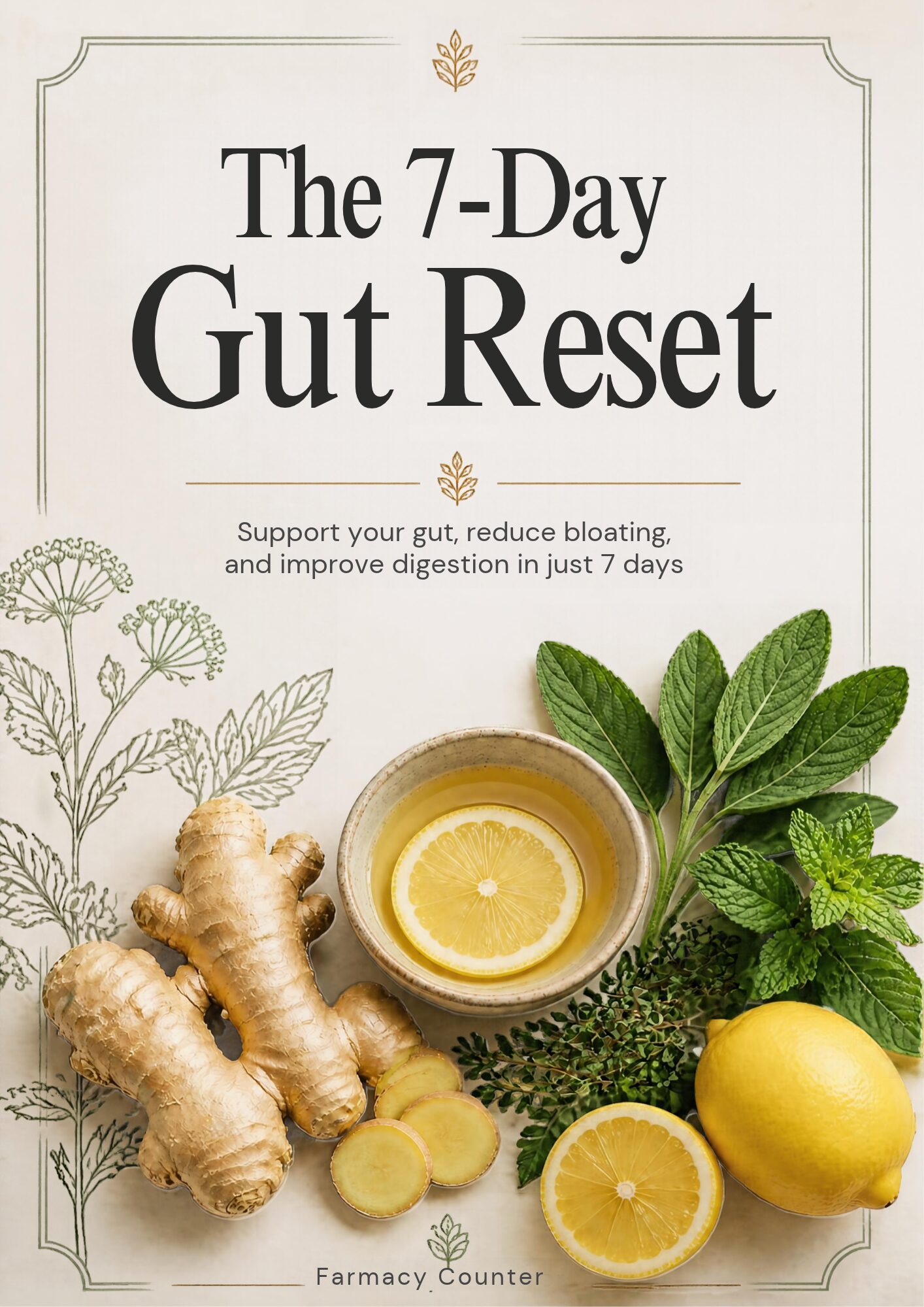
The best time to support your gut is before the season lands. My free 7-Day Gut Reset is a simple, science-backed week you can do right now: a 5-step gut healing framework, the foods to eat for a happy gut, and easy daily habits that help with bloating and digestion. No extreme diets required.
The useful part of all this is that you can support your gut before the season fully lands, instead of trying to repair it in January. You don’t need to do everything. Pick a few that feel doable.
Build your foundation
Hold your anchors
Go in supported
Get back to steady
Going in supported means that when the food does come, it lands on a gut in far better shape to handle it. For the meal itself, see how to enjoy holiday meals without regret and how to stress-proof your holidays.
A few things in your medicine cabinet can affect your gut this time of year:
Your gut often starts struggling well before the holiday food changes, because stress, short sleep, wobbling routines, and slipping basics all reach your gut lining early. Recognizing that the trouble starts with your rhythms rather than your cookies gives you a real chance to get ahead of it. (More on why the holidays take a bigger toll on your body.)
If you haven’t yet, start with the free 7-Day Gut Reset. And if bloating, reflux, or irregularity feel persistent or genuinely disruptive, I offer a free discovery call to help you understand what your gut needs. No pressure, just a conversation about whether functional medicine is the right next step for you.
Book Your Free Discovery Call →To your health and vitality, Dr. Ryan
It’s not just the food. Holiday stress, short sleep, irregular meals, more caffeine and alcohol, and less water all affect your gut lining and microbiome, often weeks before the big meals arrive.
Stress can increase intestinal permeability. In a human study, a stressful task and the stress hormone CRH made the gut barrier more permeable. Managing stress is one of the best ways to support your gut lining.
Yes. Even a couple of nights of short sleep can shift your gut bacteria, and poor sleep and gut trouble tend to feed each other.
Start early: keep regular meal and sleep times, drink enough water, cap caffeine, walk after meals, eat fiber and fermented foods, and limit alcohol, especially close to bedtime.
See your provider for heartburn most days, trouble swallowing, blood in your stool, black stools, unexplained weight loss, persistent vomiting, severe belly pain, or a lasting change in bowel habits.
For educational purposes only. Not a diagnosis, and not a substitute for care from your healthcare provider. Do not start, stop, or change any medication or supplement without talking with your provider or pharmacist.