
Stiff knees, achy hands, sore shoulders with no injury? Here’s how hormone shifts can drive joint pain in midlife, what else to rule out, and where to start.
It starts small.
Your hands feel stiff when you open a jar. Your knees complain on the first few steps in the morning. Your hips ache after sitting through a meeting. Your shoulder hurts when you reach into the back seat, and you can’t remember doing anything to it.
So you do what any smart woman does. You blame the workouts. You blame your age. You buy new shoes, start stretching, switch your supplements. Maybe you cut back on running and wonder why that didn’t help either.
Here’s what no one told you: the timing matters.
For a lot of women, the aches show up in the same season of life as the 3 a.m. wake-ups, the short fuse, the unpredictable cycle, and the fatigue that sleep doesn’t touch. That’s not a coincidence worth ignoring. It’s a pattern worth investigating.
This post covers why hormone shifts can show up in your joints, what else can look the same, and what I look at from a functional medicine perspective. Numbers in brackets point to the references at the end.
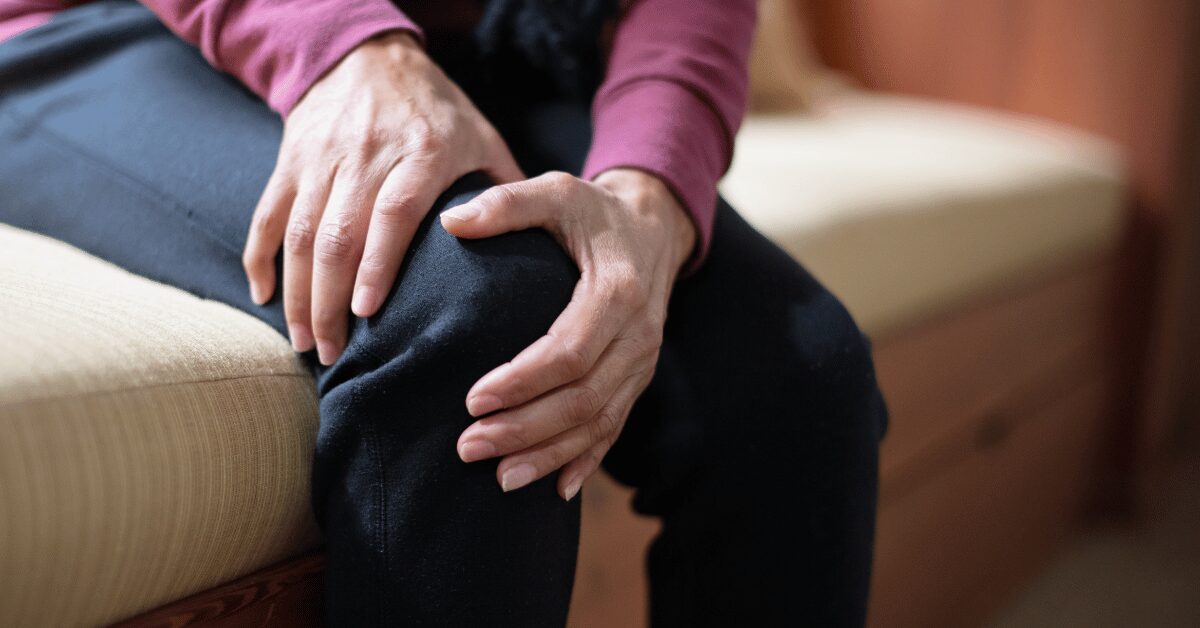
Joint and muscle aches are among the most common complaints of the menopause transition, yet they rarely make the “symptoms of menopause” list. In some studies, more than half of women in midlife report them.[1], [2]
Because the pain has no injury behind it, it gets filed under wear and tear, an orthopedic problem, or just getting older. Aging and arthritis are real, and they can absolutely contribute. But when the timing lines up with changes in your sleep, mood, and cycle, hormones belong on the list of questions.
Estrogen isn’t just a reproductive hormone. Receptors for it are found throughout your body, including cartilage, the joint lining, tendons, ligaments, bone, and muscle.[1] Those tissues are listening for it. Here’s what it does:
Estrogen helps regulate your immune system. After menopause, inflammatory messengers like IL-6 and TNF-alpha tend to rise.[3] More inflammatory signaling can mean more stiffness and soreness.
Estrogen influences collagen turnover in tendons and ligaments.[4] As levels fall, tissues can become stiffer and slower to recover, which is one reason the first steps of the morning can feel the worst.
Hormone shifts also change how your brain processes pain signals, and poor sleep amplifies that. More on that below.
None of this means every ache is hormonal. It means that when estrogen shifts, your joints are one of the places you may feel it.
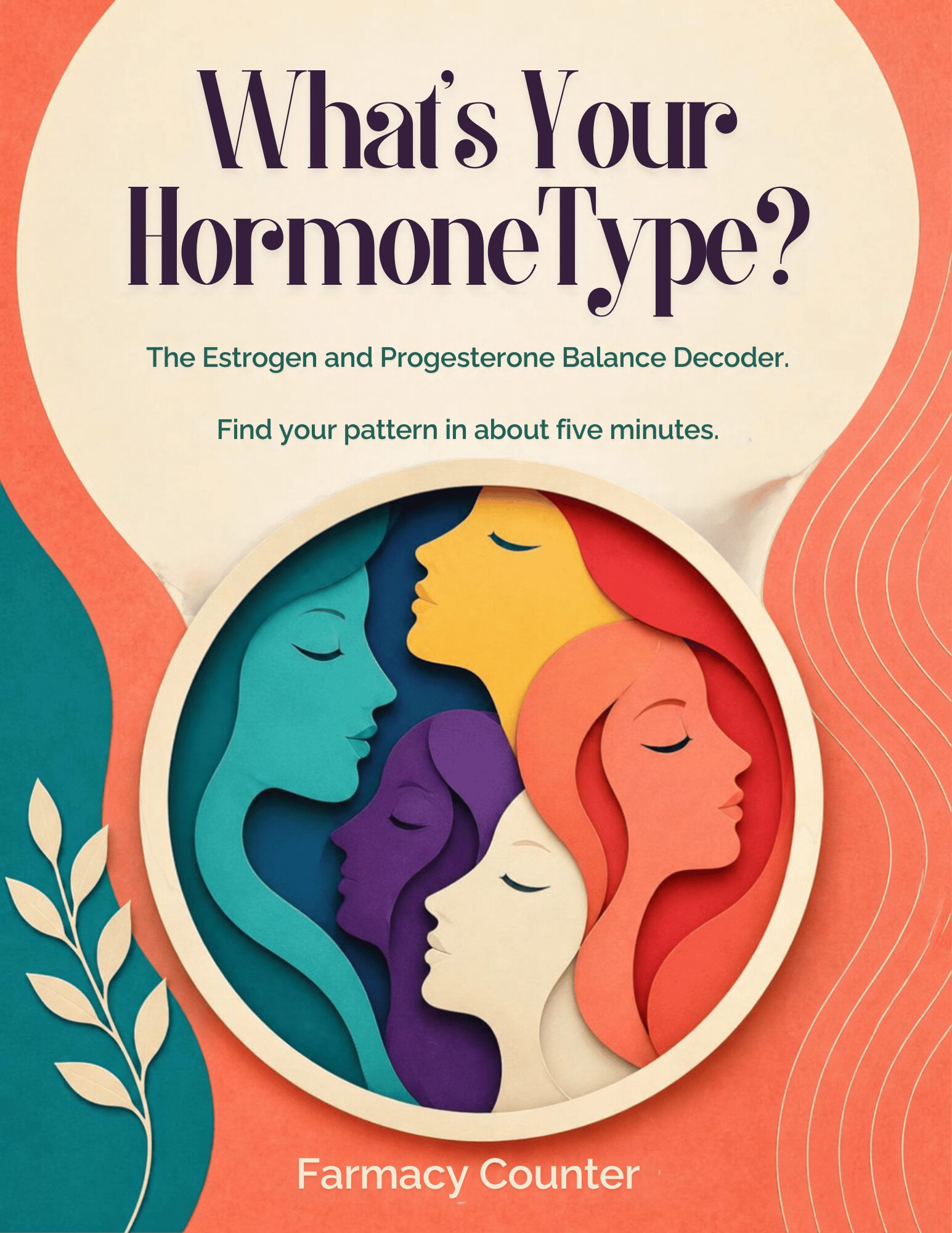
If your joint pain started around the same time your sleep, mood, or cycle changed, don’t guess. My free Hormone Type Assessment is a short quiz that helps you see whether your symptoms point toward:
Here’s where functional medicine looks different. I don’t stop at one hormone. Joint pain in midlife usually has several layers, and the hormone shift is often the match that lights a fire already laid. These are the layers I look at:
Insulin resistance drives inflammation and makes everything harder to recover from. Fasting insulin can be high even when glucose looks normal, so I look at fasting glucose, insulin, and A1c together, along with hs-CRP, a marker of systemic inflammation.
Poor sleep lowers your pain threshold, and pain in turn disrupts sleep.[6] If you’re wired at night and exhausted by day, your rhythm is part of the joint story.
Your liver and gut microbiome determine how estrogen is processed and recycled; the gut’s part is called the estrobolome.[7] When clearance is sluggish, you can feel puffy, stiff, and inflamed even when blood levels look unremarkable. More on liver hormone clearance here.
Low thyroid function commonly causes muscle and joint aches, along with fatigue, cold hands, and hair shedding. It overlaps with perimenopause and is easy to miss. I look at TSH, free T3, free T4, and antibodies.
Low ferritin, vitamin D, B12, and magnesium can all contribute to aches, fatigue, and poor recovery. I test rather than guess, especially vitamin D if you’re midlife, get limited sun, or have darker skin.
A stress response that stays switched on can fragment sleep and keep inflammation up, so I look at your daily cortisol rhythm, not just a single number.
I also sort symptoms into four working patterns, and most women overlap:
Puffiness, stiffness that’s worst in the morning, bloating, alcohol hitting harder
Achy, tired, slow to recover, dry skin, hair shedding
Stubborn midsection weight, cravings, blood sugar swings, achy joints under extra load
Wired at night, tired by day, and pain that feels worse after poor sleep
These are clues that organize questions. They don’t diagnose a cause.
This is the part I never skip. Hormonal joint pain is a pattern, but other conditions need to be ruled out, and some need different care.
| Condition | What to Know |
|---|---|
| Inflammatory arthritis | Morning stiffness lasting more than 30 to 60 minutes, swollen or warm joints, and pain in the small joints of both hands or feet are reasons to ask about rheumatoid arthritis or other inflammatory conditions. Please see your provider. |
| Gout | Sudden, intense, hot, swollen pain in the big toe or another joint. Estrogen helps your body clear uric acid, and gout risk rises after menopause.[5] |
| Osteoarthritis | Common in midlife and often overlaps with hormonal changes. |
| Thyroid and nutrient problems | As above, and very treatable. |
As a pharmacist, this is the one I check first. Aromatase inhibitors used after breast cancer commonly cause joint pain.[8] Statins can cause muscle aches.[9] Fluoroquinolone antibiotics can cause tendon problems.[10] If you started a new medication around the time the pain began, tell your provider. Never stop a medication on your own.
A single hot, red, swollen joint, fever, unexplained weight loss, or pain that wakes you at night and keeps getting worse needs prompt medical attention.
You don’t need a perfect plan. These are the foundations that matter most:
Exercise is one of the best-supported treatments for joint pain, particularly in the knee.[11] It also protects muscle and bone, which matter more every year in midlife. Start where you are, and get help with form if you need it.
Your muscles support your joints, and protein needs tend to rise in midlife.
A steady wake time, morning light, and a wind-down routine help your rhythm and your pain threshold.
Build meals around protein, colorful vegetables, fiber, and healthy fats like olive oil and fatty fish. Go easy on ultra-processed food and alcohol, which can disrupt sleep and raise inflammation.
Start meals with protein and vegetables, and take a short walk after eating.
Walking, swimming, and yoga keep joints moving. Rest days matter, but long stretches of sitting make stiffness worse.
Omega-3s have been shown to reduce joint pain, mostly in people with rheumatoid arthritis.[12] Vitamin D and magnesium may help if you’re low. Test first, and check in if you take medications or have a health condition.
These are the omega-3, vitamin D, and magnesium products I carry. Check with your provider first, especially if you take medications.
Products shown are available through my Fullscript dispensary. Farmacy Counter may earn a commission on purchases.
Sometimes. In the Women’s Health Initiative estrogen-alone trial, women assigned to estrogen reported modestly less joint pain and stiffness than women on placebo.[13] Many women on hormone therapy tell me their aches improved.
But joint pain isn’t a primary reason prescribers start hormone therapy, and it won’t work for every woman. Menopausal hormone therapy is used mainly for hot flashes and night sweats, and also for bone protection, and it isn’t right for everyone.[14] It works best as part of a bigger plan that includes the foundations above. For more, read what the evidence shows about hormone therapy.
Aches are common. But please talk with your healthcare provider promptly if you have swollen, hot, or red joints, morning stiffness lasting more than an hour, fever, a joint that suddenly can’t bear weight, or pain that’s getting steadily worse. Don’t assume it’s just aging.
The first step is figuring out the pattern. If you haven’t yet, start with the free Hormone Type Assessment. And if you’d rather talk through what’s going on with your hormones, inflammation, and joints, I offer a free discovery call. No pressure, just a conversation about whether functional medicine is the right next step for you.
Book Your Free Discovery Call →To your health and vitality, Dr. Ryan
Yes. Joint and muscle aches are among the most common symptoms of the menopause transition, reported by more than half of midlife women in some studies. Estrogen helps regulate inflammation and supports connective tissue, so falling levels can show up as stiffness and aches.
It often shows up as stiffness in the hands, knees, hips, or shoulders with no injury, worst in the morning or after sitting, and appearing around the same time as changes in sleep, mood, or your cycle.
It can. In the Women’s Health Initiative estrogen-alone trial, women on estrogen reported modestly less joint pain and stiffness than women on placebo. Joint pain isn’t a primary reason to start hormone therapy, though, and it isn’t right for everyone.
Osteoarthritis, rheumatoid and other inflammatory arthritis, gout, low thyroid function, nutrient deficiencies like low vitamin D or ferritin, and medications such as aromatase inhibitors, statins, and fluoroquinolone antibiotics.
Promptly if you have swollen, hot, or red joints, morning stiffness lasting more than an hour, fever, unexplained weight loss, a joint that suddenly can’t bear weight, or pain that keeps getting worse.
For educational purposes only. Not a diagnosis, and not a substitute for care from your healthcare provider. Talk with your provider before starting, stopping, or changing any medication or supplement.